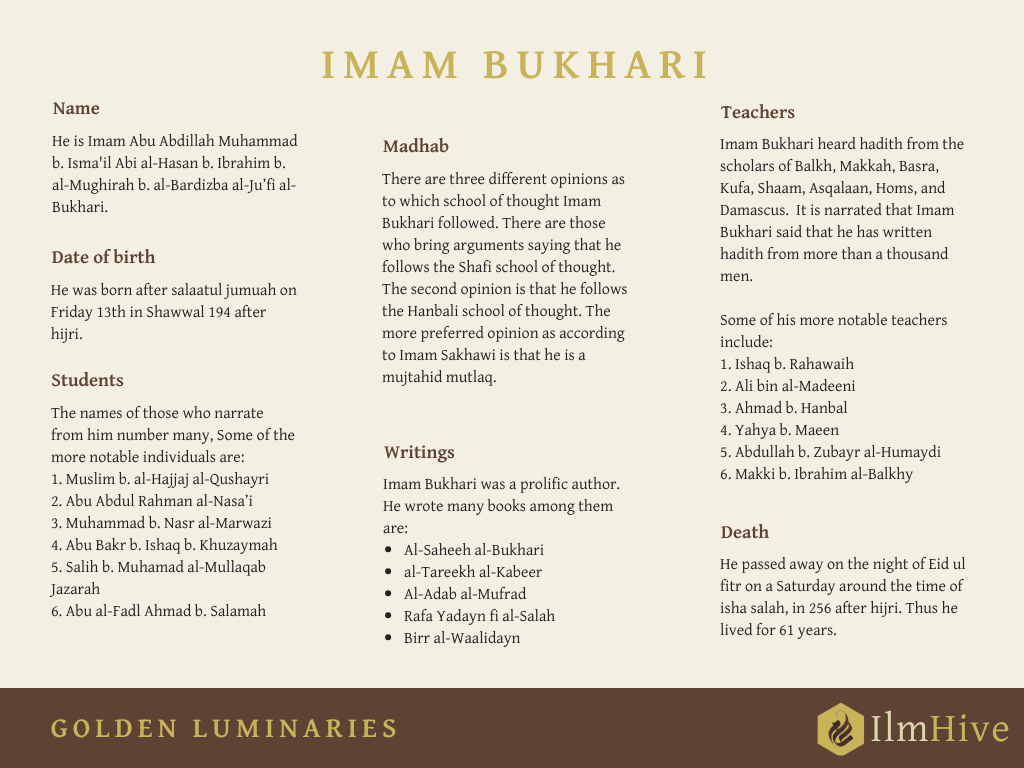
The Bayquniyyah poem is a primer on the science of Mustalah al-hadith, essential for students of knowledge.
Bayquniyyah Poem with English Translation
Bayquniyyah Arabic Matn
1. أبدأُ بالحمدِ مُصَلِّياً على مُحمَّدٍ خَيِر نبيْ أُرســـــِلا
2. وذِي مِنَ أقسَامِ الحديث عدَّة وكُلُّ واحدٍ أتى وحــــَدَّه
3. أوَّلُها (الصحيحُ) وهوَ ما اتَّصَل إسنادُهُ ولْم يشَذّ أو يُعـَلّ
4. يَرْويهِ عَدْلٌ ضَابِطٌ عَنْ مِثْلِه مُعْتَمَدٌ في ضَبْطِهِ ونَقْلــــِهِ
5. وَ(الَحسَنُ) الَمعْرُوفُ طُرْقاً وغَدَتْ رِجَالُهُ لا كالصّحيحِ اشْتَهَرَتْ
6. وكُلُّ ما عَنْ رُتبةِ الـحسْنِ قَصُرْ فَهْوَ (الضعيفُ) وهوَ أقْسَاماً كُثُرْ
7. (وما أُضيفَ للنبي (الَمرْفوعُ) وما لتَابِعٍ هُـوَ (المقْطــُوعُ
8. وَ(الُمسْنَدُ) الُمتَّصِلُ الإسنادِ مِنْ رَاويهِ حتَّى الُمصْطفى ولْم يَبـِنْ
9. (ومَا بِسَمْعِ كُلِّ رَاوٍ يَتَّصِل إسْنَادُهُ للمُصْطَفى فَـ(الُمتَّصــِلْ
10. مُسَلْسَلٌ) قُلْ مَا عَلَى وَصْفٍ أتَى مِثْلُ أمَا والله أنْبأنِي الفــَتى)
11. كذَاكَ قَدْ حَدَّثَنِيهِ قائِماً أوْ بَعْدَ أنْ حَدَّثَنِي تَبَسَّـــــمَا
12. عَزيزٌ) مَروِيُّ اثنَيِن أوْ ثَلاثهْ (مَشْهورٌ) مَرْوِيُّ فَوْقَ ما ثَلاثــَهْ)
13. مُعَنْعَنٌ) كَعَن سَعيدٍ عَنْ كَرَمْ (وَمُبهَمٌ) مَا فيهِ رَاوٍ لْم يُسَـمْ)
14. (وكُلُّ مَا قَلَّت رِجَالُهُ (عَلا) وضِدُّهُ ذَاكَ الذِي قَدْ (نَــــزَلا
15. ومَا أضَفْتَهُ إلى الأصْحَابِ مِنْ قَوْلٍ وفعْلٍ فهْوَ (مَوْقُوفٌ) زُكـِنْ
16. وَمُرْسلٌ) مِنهُ الصَّحَابُّي سَقَطْ وقُلْ (غَريبٌ) ما رَوَى رَاوٍ فَقـَطْ)
17. وكلُّ مَا لْم يَتَّصِلْ بِحَالٍ إسْنَادُهُ (مُنْقَطِعُ) الأوْصـــــَالِ
18. والُمعْضَلُ) السَّاقِطُ مِنْهُ اثْنَانِ ومَا أتى (مُدَلَّساً) نَوعــــَانِ)
19. الأوَّل الإسْقاطُ للشَّيخِ وأنْ يَنْقُلَ مَّمنْ فَوْقَهُ بعــــَنْ وأنْ
20. والثَّانِ لا يُسْقِطُهُ لكنْ يَصِفْ أوْصَافَهُ بما بهِ لا يَنْعــــَرِفْ
21. ومَا يَخالِفُ ثِقةٌ فيهِ الَملا فـ(الشَّاذُّ) و(الَمقْلوبُ) قِسْمَانِ تَلا
22. إبْدَالُ راوٍ ما بِرَاوٍ قِسْمُ وقَلْبُ إسْنَادٍ لمتنٍ قِســــــْمُ
23. وَ(الفَرَدُ) ما قَيَّدْتَهُ بثِقَةِ أوْ جْمعٍ أوْ قَصِر على روايــــةِ
24. ومَا بعِلَّةٍ غُمُوضٍ أوْ خَفَا (مُعَلَّلٌ) عِنْدَهُمُ قَدْ عُـــــرِفَا
25. وذُو اخْتِلافِ سنَدٍ أو مَتْنٍ (مُضْطربٌ) عِنْدَ أهيْلِ الفَـــنِّ
26. وَ(الُمدْرَجاتُ) في الحديثِ ما أتَتْ مِنْ بَعْضِ ألفاظِ الرُّوَاةِ اتَّصَلَتْ
27. ومَا رَوى كلُّ قَرِينٍ عنْ أخهْ (مُدَبَّجٌ) فَاعْرِفْهُ حَقًّا وانْتَخــِهْ
28. (مُتَّفِقٌ لَفْظاً وخطاً (مُتَّفقْ) وضِدُّهُ فيما ذَكَرْنَا (الُمفْتـــِرقْ
29. مُؤْتَلِفٌ) مُتَّفِقُ الخطِّ فَقَطْ وضِدُّهُ (مُختَلِفٌ) فَاخْشَ الغَلَــطْ)
30. والُمنْكَرُ) الفَردُ بهِ رَاوٍ غَدَا تَعْدِيلُهُ لا يْحمِلُ التَّفَــــرُّدَا)
31. مَتُروكُهُ) مَا وَاحِدٌ بهِ انفَردْ وأجَمعُوا لضَعْفِه فَهُوَ كـــَرَدّ)
32. (والكذِبُ الُمخْتَلَقُ المصنُوعُ علَى النَّبيِّ فذَلِكَ (الموْضـــُوعُ
33. وقَدْ أتَتْ كالَجوْهَرِ المكْنُونِ سَمَّيْتُهَا: مَنْظُومَةَ البَيْقُــــوني
34. فَوْقَ الثَّلاثيَن بأرْبَعٍ أتَتْ أقْسامُهَا ثمَّ بخيٍر خُتِمــــــَتْ
Bayquniyyah with English Translation
أَبْـدَأُ بِالْحَمْـدِ مُصَلِّـياً عَلَى مُحَمَّـدٍ خَـيرِ نَبِـيٍّ أُرْسِلاَ
Begin I do with praise, and prayers and salutations
On Muḥammad the Noble Prophet, the finest ever commissioned
وَذِي مِنْ أَقْـسَامِ الْحَدِيثِ عِدَّه وَكُـلُّ وَاحِدٍ أَتَـى وَحَـدَّه
So what follows are a number, of the ḥadīth divisions
And all of them do come, with their definitions
أَوَّلُهَا الصَّحِيحُ وَهْوَ مَا اتَّـصَلْ إِسْـنَادُهُ وَلَمْ يَشُـذَّ أَوْ يُعَلّ
The first of them is Sound,1 and that is neither broken
in its chain, nor does it contradict or have a hidden failing
يَرْوِيـهِ عَدْلٌ ضَابِطٌ عَنْ مِثْلِـهِ مُعْـتَمَدٌ فِي ضَبْـطِهِ وَنَقْـلِهِ
One who is upright and precise, narrates from his like
Reliable in his precision, as well as his transmission
وَالْحَسَنُ الْمَعْرُوفُ طُرْقاً وَغَدَتْ رِجَالُهُ لاَ كَالصَّحِيحِ اشْتَهَرَتْ
The tradition that is Fair,2 is one whose routes are known
Its narrators not as famous, as the Sound have shown
وَكُلُّ مَا عَنْ رُتْبـَةِ الْحُسْنِ قَصُرْ فَهْوَ الضَّعِيفُ وَهْوَ أَقْسَاماً كَثُرْ
And all that falls, below the rank, of the Fair tradition
Weak3 it is, falling short, with many subdivisions.
وَمَا أُضِيـفَ لِلنَّبِي الْـمَرْفُوعُ وَمَا لِـتَابِعٍ هُوَ الْـمَقْـطُوعُ
Attributed to the Prophet, is the tradition that is Raised4
While falling on the Successor, Broken5 is it phrased
وَالْمُسْنَدُ الْمُتَّصِلُ الإِسْـنَادِ مِنْ رَاوِيهِ حَتَّى الْمُصْطَفَى وَلَمْ يَبِنْ
The tradition that is Supported,6 its chain is indeed unbroken
Intact from its last narrator, to the One who has been Chosen
وَمَا بِـسَمْعِ كُلِّ رَاوٍ يَـتَّـصِلْ إِسْنَادُهُ لِلْمُصْطَفَى فَالْمُتَّـصِلْ
And whatsoever is connected, by the hearing of all who narrated
Through the one who has been Chosen, the term is then Connected7
مُسَلْسَلٌ قُلْ مَا عَلَى وَصْفٍ أَتَى مِثلُ أَمَـا وَاللَّهِ أَنْـبَانِي الْفَتَى
Linked8 is the tradition, that does come with a story
As in the saying, “By God it was the lad who did inform me”
كَـذَاكَ قَدْ حَدَّثَنِيـهِ قَائِـمـاَ أَوْ بَـعْدَ أَنْ حَدَّثَنِـي تَبَسَّماَ
Likewise: “He told me as he was standing”
Or, “And after he told me he was smiling”
عَزِيـزُ مَرْوِي اثْـنَينِ أَوْ ثَلاَثَهْ مَشْـهُورُ مَرْوِي فَوقَ مَا ثَلاَثَهْ
Strengthened9 is the narration, related by two or three
Popular10 is the one, related by more than three
مُعَنْـعَنٌ كَعَنْ سَعِيـدٍ عَنْ كَرَمْ وَمُبْـهَمٌ مَا فِيهِ رَاوٍ لَمْ يُسَمّ
Like “from Saʿīd from Karam,” the Muʿanʿan is proclaimed
The Obscure11 contains a person, who has not been named
وَكُلُّ مَـا قَلَّـتْ رِجَالُهُ عَـلاَ وَضِدُّهُ ذَاكَ الَّـذِي قَدْ نَزَلاَ
Those whose men are few, are indeed Uplifted12
Opposed to those the ones, which are deemed Descended13
وَمَا أَضَفْتَهُ إِلَى الأَصْحَابِ مِنْ قَولٍ وَفِعْلٍ فَهْوَ مَوْقُوفٌ زُكِنْ
And that which you related, to the Companions of the Prophet
From their speech and from their actions, the term is then Suspended14
وَمُـرْسَلٌ مِنْهُ الصَّحَابِيُّ سَقَطْ وَقُلْ غَرِيبٌ مَا رَوَى رَاوٍ فَقَطْ
Sent15 is the tradition, the Companion is omitted
And say, Strange16 is the one, that only one related
وَكُلُّ مَـا لَمْ يَتَّـصِلْ بِـحَالِ إِسْـنَادُهُ مُنْـقَطِعُ الأَوْصَالِ
And each report that does fall short, in its full connection
Its chain is really lacking, Severed17 in its union
وَالْمُعْـضَلُ السَّـاقِطُ مِنْهُ اثْنَانِ وَمَـا أَتَـى مُدَلِّـساً نَوْعَانِ
Problematic18 is the one, from which two are fallen
And that which comes Concealed,19 its types are two in version
الأَوَّلُ الإِسْـقَاطُ لِلشَّيْـخِ وَأَنْ يَنْقُلَ عَمَّنْ فَوقَـهُ بِـعَنْ وَأَنْ
The first of these is by, dropping the teacher and
relating from above him, using terms like “from” and “that”
وَالثَّانِي لاَ يُسْقِطُهُ لَكِـنْ يَصِفْ أَوْصَافَهُ بِمَـا بِـهِ لاَ يَنْعَرِفْ
The second does arise, not by dropping, but when you do describe
Those traits of his by which he is not recognized
وَمَـا يُخَالِفْ ثِـقَةٌ بِـهِ الْـمَلاَ فَالشَّاذُّ وَالْمَقْلُوبُ قِسمَانِ تَلاَ
The one by which the trusted contradicts the greater number
Anomalous20 it is, while the Switched21 are two in number
إِبْـدَالُ رَاوٍ مَـا بِـرَاوٍ قِـسْمُ وَقَلْبُ إِسْنَادٍ لِمَتْـنٍ قِـسْمُ
The first: a switch within the chain, one person for another
But the flipping of the chain to another text, that is the other
وَالْـفَرْدُ مَـا قَيَّـدْتَهُ بِـثِقَـةِ أَوْ جَمْعٍ أَوْ قَصْرٍ عَلَـى رِوَايَةِ
And Singular22 is the tradition confined to a trustworthy person
To a group or to a region, by way of one narration
وَمَا بِـعِلَّـةٍ غُمُـوضٌ أَوْ خَفَـا مُعَلَّـلٌ عِنْـدَهُمُ قَدْ عُرِفَـا
And whatever contains a flaw, subtle or obscure
Is then deemed Defective,23 with them known for sure
وَذُو اخْـتِلاَفٍ سَنَـدٍ أَوْ مَتْـنِ مُضْطَرِبٌ عِنْدَ أُهَيـلِ الْفَـنِّ
Those that do contain, variance in their text or chain
Confounded24 are they named, by the masters of this game
وَالْمُدْرَجَاتُ فِي الْحَدِيثِ مَا أَتَتْ مِنْ بَعْضِ أَلْفَاظِ الرُوَاةِ اتَّصَلَتْ
And those Interjections25 into the traditions, are what have come to us
From the words of the narrators, in the chains continuous
وَمَـا رَوَى كُلُّ قَرِينٍ عَنْ أَخِـهْ مُدَبَّـجٌ فَاعْرِفْهُ حَقاًّ وَانْـتَخِهْ
And what a peer narrates on the authority of his brother,
Adorned26 it is, so know it well, and by it gain your honor
مُتَّـفِـقٌ لَفْظـاً وَخَطاًّ مُتَّـفِقْ وَضِدُّهُ فِيمَـا ذَكَرْنَا الْمُفْتَرِقْ
Agreeing with another, in wording and in script, is the Congruous27
The flip of this, as we have mentioned, is termed Incongruous28
مُؤْتَلِفٌ مُتَّـفِقُ الْـخَطِّ فَـقَطْ وَضِدُّهُ مُخْتَلِفٌ فَاخْشَ الْغَلَطْ
The Common29 one agrees, only in its script
Opposed to it is Discordant,30 so be wary of a slip
وَالْـمُنْكَرُ الْـفَرْدُ بِهِ رَاوٍ غَدَا تَعْدِيـلُهُ لاَ يَحْـمِلُ التَّـفَرُّدَا
Detested31 is the tradition, arising from the single person
Whose vindication cannot strengthen the sole narration
مَتْرُوكُـهُ مَا وَاحِدٌ بِـهِ انْـفَرَدْ وَأَجْمَعُواْ لِضَعْفِـهِ فَهُوَ كَرَدّ
The tradition is Discarded32 that a single one related
Whose weakness is agreed, which is then rejected
وَالْكَذِبُ الْمُخْتَلَقُ الْـمَصْنُوعُ عَلَى النَّبِي فَذَلِكَ الْـمَوْضُوعُ
And the lie, concocted and contrived
On the Prophet, is Fabricated33 and connived
وَقَدْ أَتَتْ كَالْجَوْهَرِ الْـمَكْنُونِ سَمَّيْـتُهَا مَنْظُومَةَ الـْبَيْقُونِي
And it has come, like a pearl, veiled from show
Ode of Bayqūnī, have I named it so
فَوْقَ الـثَّلاَثِيـنَ بِأَرْبَعٍ أَتَـتْ أَقْـسَامُهَا تَمَّتْ بِخَيْرٍ خُتِمَتْ
By four beyond thirty thus have come
their lines in sum, with grace they’re done.