
Ṭabaqāt in Taqrīb al-Tahdhīb
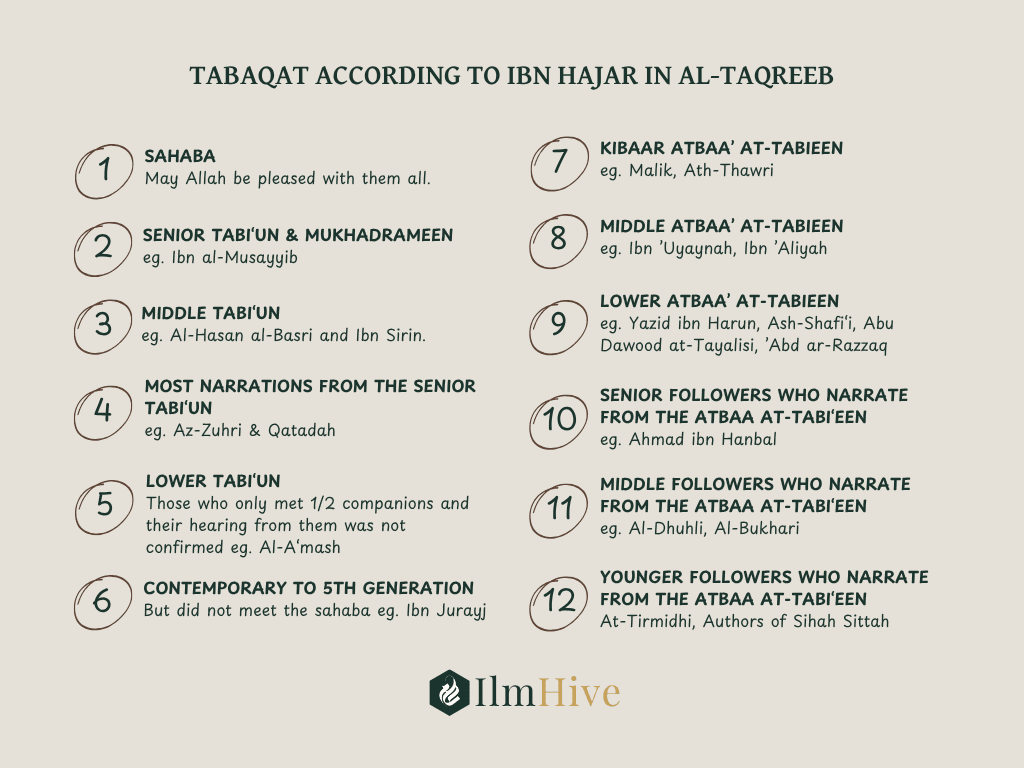
Taqrīb al-Tahdhīb (تقريب التهذيب) by Ḥāfiẓ Ibn Ḥajar al-ʿAsqalānī is a condensed version of his fuller work Tahdhīb al-Tahdhīb. It categorises the narrators of the six major ḥadīth collections: Ṣaḥīḥ al-Bukhārī, Ṣaḥīḥ Muslim, Sunan Abī Dāwūd, Sunan al-Nasāʾī, Jāmiʿ al-Tirmidhī and Sunan Ibn Mājah, along with other works by the authors of those collections.
Ṭabaqāt (Generational Classes) in Taqrīb al-Tahdhīb
Ḥāfiẓ Ibn Ḥajar arranges narrators into twelve generational levels (ṭabaqāt). These levels mark a narrator's position in the chain of narration (isnād) and his proximity to the Prophet ﷺ. Committing them to memory is essential for the student of ḥadīth: without it, Taqrīb al-Tahdhīb cannot be used effectively to weigh a narrator's reliability or his place in transmission.
Example
Under entry 3 in Taqrīb al-Tahdhīb, Ḥāfiẓ Ibn Ḥajar mentions:
٣- أحمد ابن إبراهيم ابن كثير ابن زيد الدورقي النكري بضم النون البغدادي ثقة حافظ من العاشرة مات سنة ست وأربعين م د ت ق
Translation
3. Aḥmad ibn Ibrāhīm ibn Kathīr ibn Zayd al-Dūraqī al-Nukrī (with a ḍamma on the letter nūn), al-Baghdādī: a trustworthy and reliable memoriser (ḥāfiẓ) from the tenth generation. He passed away in the year 246 AH. He is referenced in the following ḥadīth collections: م (Ṣaḥīḥ Muslim), د (Sunan Abī Dāwūd), ت (Jāmiʿ al-Tirmidhī), and ق (Sunan Ibn Mājah).
Understanding "min al-ʿāshirah" (from the tenth generation)
To make sense of من العاشرة ("from the tenth generation"), one needs to know how Ḥāfiẓ Ibn Ḥajar arranged the narrators into twelve classes. He sets out the طبقات as follows:
وأما الطبقات:
فالأولى: الصحابة، على اختلاف مراتبهم، وتمييز من ليس له منهم إلا مجرد الرؤية من غيره.
الثانية: طبقة كبار التابعين، كابن المسيب، فإن كان مخضرما صرحت بذلك.
الثالثة: الطبقة الوسطى من التابعين، كالحسن وابن سيرين.
الرابعة: طبقة تليها جل روايتهم عن كبار التابعين، كالزهري وقتادة.
الخامسة: الطبقة الصغرى منهم، الذين رأوا الواحد والاثنين، ولم يثبت لبعضهم السماع من الصحابة، كالأعمش.
السادسة: طبقة عاصروا الخامسة، لكن لم يثبت لهم لقاء أحد من الصحابة، كابن جريج.
السابعة: طبقة كبار أتباع التابعين، كمالك والثوري.
الثامنة: الطبقة الوسطى منهم، كابن عيينة وابن علية.
التاسعة: الطبقة الصغرى من أتباع التابعين، كيزيد بن هارون، والشافعي، وأبي داود الطيالسي، وعبد الرزاق.
العاشرة: كبار الآخذين عن تبع الأتباع، ممن لم يلق التابعين، كأحمد بن حنبل.
الحادية عشرة: الطبقة الوسطى من ذلك، كالذهلي والبخاري.
الطبقة الثانية عشرة: صغار الآخذين عن تبع الأتباع، كالترمذي، وألحقت بها باقي شيوخ الأئمة الستة، الذين تأخرت وفاتهم قليلا، كبعض شيوخ النسائي.
(Taqrīb al-Tahdhīb, p. 75)
The classes are as follows:
- First Generation (الطبقة الأولى): the Companions of the Prophet ﷺ, with distinction made between those who only saw the Prophet and those who had a deeper connection with him.
- Second Generation (الطبقة الثانية): the senior Tābiʿūn (Followers), such as Ibn al-Musayyib. If any of them were mukhaḍram (born during the Prophet's time but did not meet him), this is explicitly mentioned.
- Third Generation (الطبقة الثالثة): the middle Tābiʿūn, such as al-Ḥasan al-Baṣrī and Ibn Sīrīn.
- Fourth Generation (الطبقة الرابعة): the next layer, most of whom narrated from the senior Tābiʿūn, such as al-Zuhrī and Qatādah.
- Fifth Generation (الطبقة الخامسة): the lower Tābiʿūn, who met only one or two Companions and whose hearing from them was not confirmed, like al-Aʿmash.
- Sixth Generation (الطبقة السادسة): a generation contemporary to the fifth, but they did not meet any of the Companions, like Ibn Jurayj.
- Seventh Generation (الطبقة السابعة): the senior followers of the Tābiʿūn, such as Mālik and al-Thawrī.
- Eighth Generation (الطبقة الثامنة): the middle group among them, such as Ibn ʿUyaynah and Ibn ʿUlayyah.
- Ninth Generation (الطبقة التاسعة): the younger followers of the Tābiʿūn (atbāʿ al-tābiʿīn), such as Yazīd ibn Hārūn, al-Shāfiʿī, Abū Dāwūd al-Ṭayālisī and ʿAbd al-Razzāq.
- Tenth Generation (الطبقة العاشرة): the senior followers who did not meet the Tābiʿūn, like Aḥmad ibn Ḥanbal.
- Eleventh Generation (الطبقة الحادية عشرة): the middle group of this generation, such as al-Dhuhlī and al-Bukhārī.
- Twelfth Generation (الطبقة الثانية عشرة): the younger members of this group, such as al-Tirmidhī. Ibn Ḥajar also places here the remaining shaykhs of the six imāms whose deaths came a little later, like some of the shaykhs of al-Nasāʾī.
Applying "min al-ʿāshirah" in the Example
In the example above, من العاشرة ("from the tenth generation") places Aḥmad ibn Ibrāhīm ibn Kathīr ibn Zayd al-Dūraqī al-Nukrī in the tenth generation. This corresponds to the Atbāʿ Atbāʿ al-Tābiʿīn (followers of the followers' followers).
Determining the Year of Death
The phrase مات سنة ست وأربعين ("died in the year 46") needs to be read in context, since Ḥāfiẓ Ibn Ḥajar drops the hundreds. To fix the correct century, one returns to the generation, as Ibn Ḥajar himself directs:
فإن كان من الأولى والثانية: فهم قبل المائة، وإن كان من الثالثة إلى آخر الثامنة: فهم بعد المائة، وإن كان من التاسعة إلى آخر الطبقات: فهم بعد المائتين، ومن ندر عن ذلك بينته.
If the narrator is from the first or second generation, he passed away before the year 100. If he is from the third to the eighth generations, he passed away after 100 but before 200. If he is from the ninth class onward, he passed away after the year 200. Where there is an exception to this, I have made it clear.
In summary:
- Narrators from the first and second generations passed away before 100 AH.
- Those from the third to eighth generations passed away between 100 AH and 200 AH.
- Those from the ninth generation onwards passed away after 200 AH.
Since Aḥmad ibn Ibrāhīm ibn Kathīr ibn Zayd al-Dūraqī is from the tenth generation, he passed away after 200 AH, so سنة ست وأربعين is the year 246 AH.
Symbols Used by Ibn Ḥajar
The symbols م د ت ق in the entry indicate the ḥadīth collections in which the narrator is referenced:
- م: Ṣaḥīḥ Muslim
- د: Sunan Abī Dāwūd
- ت: Jāmiʿ al-Tirmidhī
- ق: Sunan Ibn Mājah
For further details on Ibn Ḥajar's use of symbols in his Taqrīb, see Rumūz: Symbols Used by Ibn Ḥajar in Taqrīb al-Tahdhīb.