
Mawlānā ʿAbd al-Ḥayy al-Laknawī and the First Printed Edition of Muqaddimat Ibn al-Ṣalāḥ: A Reassessment
In the field of ʿUlūm al-Ḥadīth, Muqaddimat Ibn al-Ṣalāḥ, authored by Ibn al-Ṣalāḥ, is an authoritative text that is studied and taught across the globe. In recent years, it has served as an anchor text in postgraduate Ḥadīth and takhaṣṣuṣ programmes.
As with many classical works, scholars have engaged in discussions regarding the title assigned to the book by its author. Muqaddimat Ibn al-Ṣalāḥ is one such work whose title has been the subject of debate. One of the questions raised is whether ʿAllāmah Ibn al-Ṣalāḥ himself named the book al-Muqaddimah, as it is famously known today, and if not, how this title came to be associated with it.
The purpose of this article is not to weigh the various opinions or argue for a particular title. I mention this discussion only as a preliminary point, since one of the views advanced is that the book was not originally called al-Muqaddimah. Rather, it became widely known by this title because when the book was first published, it was published by the Indian Chashma Fayḍ Press in 1304/1886 under the supervision of Mawlānā ʿAbd al-Ḥayy al-Laknawī, and it appeared with this title. This explanation was put forward by Dr Muwaffaq ibn ʿAbd Allāh1 and was accepted by Dr Māhir al-Faḥl.2 Based on their explanation, subsequent editions also adopted this title.3
It appears that the explanation of Dr Muwaffaq ibn ʿAbd Allāh was based on the attribution made to Mawlānā ʿAbd al-Ḥayy al-Laknawī in the Egyptian edition of 1306/1888, worked on by Shaykh Maḥmūd al-Sukkarī and Muḥammad Amīn (see Figure 1).
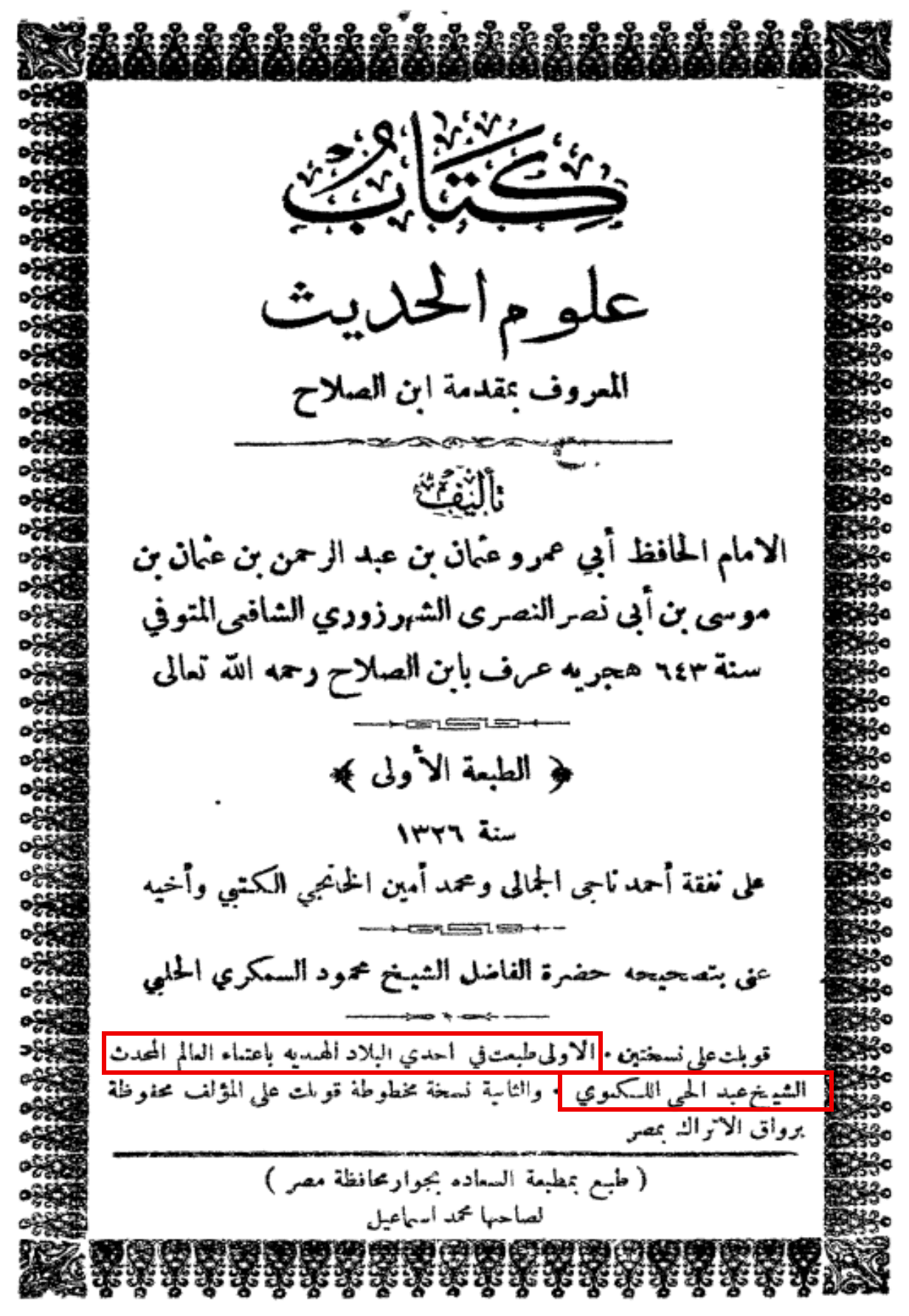 Figure 1. Egyptian edition of Muqaddimat Ibn al-Ṣalāḥ (1326/1908, Maṭbaʿat al-Saʿādah), with the corrections of Shaykh Maḥmūd al-Sukkarī and Muḥammad Amīn. The section outlined in red contains the attribution to Mawlānā ʿAbd al-Ḥayy al-Laknawī.
What I wish to focus on in this piece is whether this edition was in fact published under the supervision of Mawlānā ʿAbd al-Ḥayy al-Laknawī. We find that neither the introduction nor the colophon of the 1304/1886 Chashma Fayḍ edition makes any mention of him.
Rather, in the colophon, the publication is attributed to Mawlavī Khādim Ḥusayn, a teacher of Mawlānā ʿAbd al-Ḥayy,4 while the text itself was worked on by Mawlavī ʿAbd al-Bāqī al-Anṣārī al-Laknawī, the cousin and student of Mawlānā ʿAbd al-Ḥayy5 (refer to Figure 2.1).
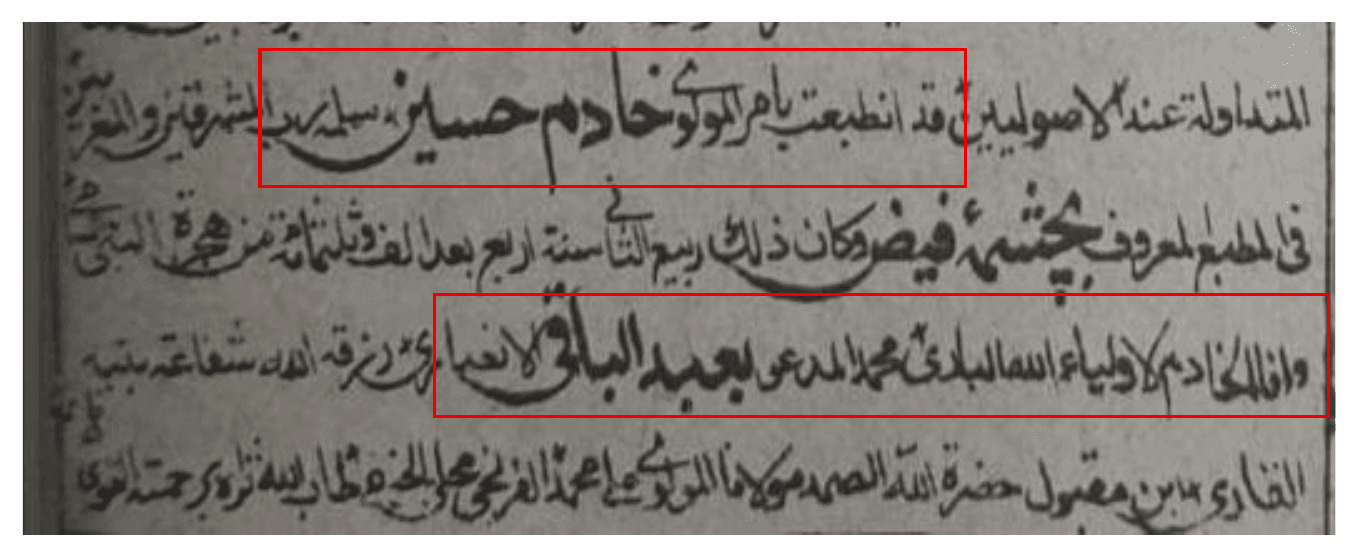 Figure 2.1. Colophon of the 1304/1886 Chashma Fayḍ edition of Muqaddimat Ibn al-Ṣalāḥ, stating that the text was prepared by Mawlavī ʿAbd al-Bāqī al-Anṣārī al-Laknawī and that its publication was commissioned by Mawlavī Khādim Ḥusayn. I am grateful to Shaykh Bilal Darwesh of Dār Ibn Masʿūd li-Matjar al-Maṭbūʿāt al-Nādirah (Pakistan) for kindly providing these images free of charge.
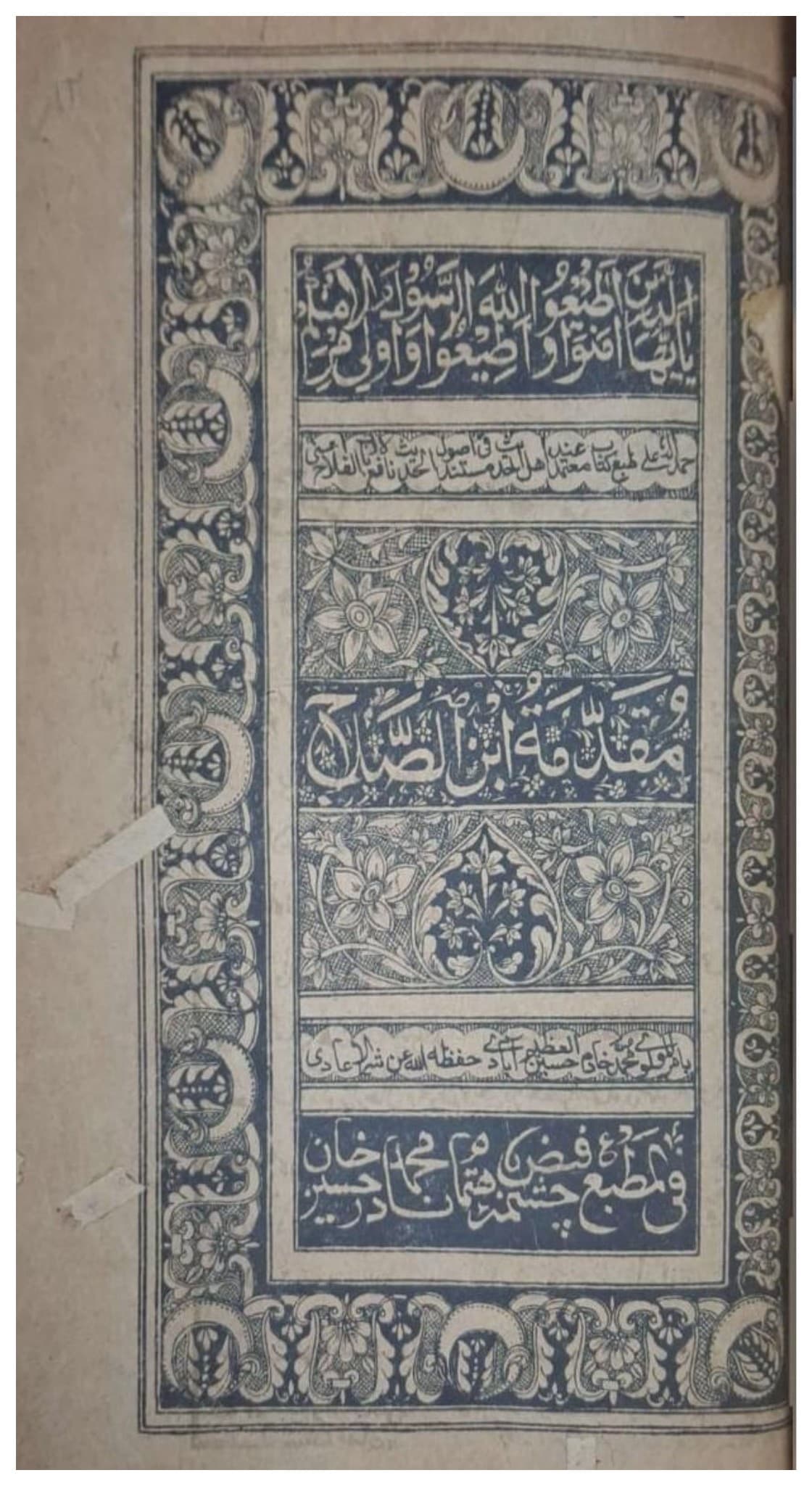 Figure 2.2. Title page of the 1304/1886 Chashma Fayḍ edition of Muqaddimat Ibn al-Ṣalāḥ.
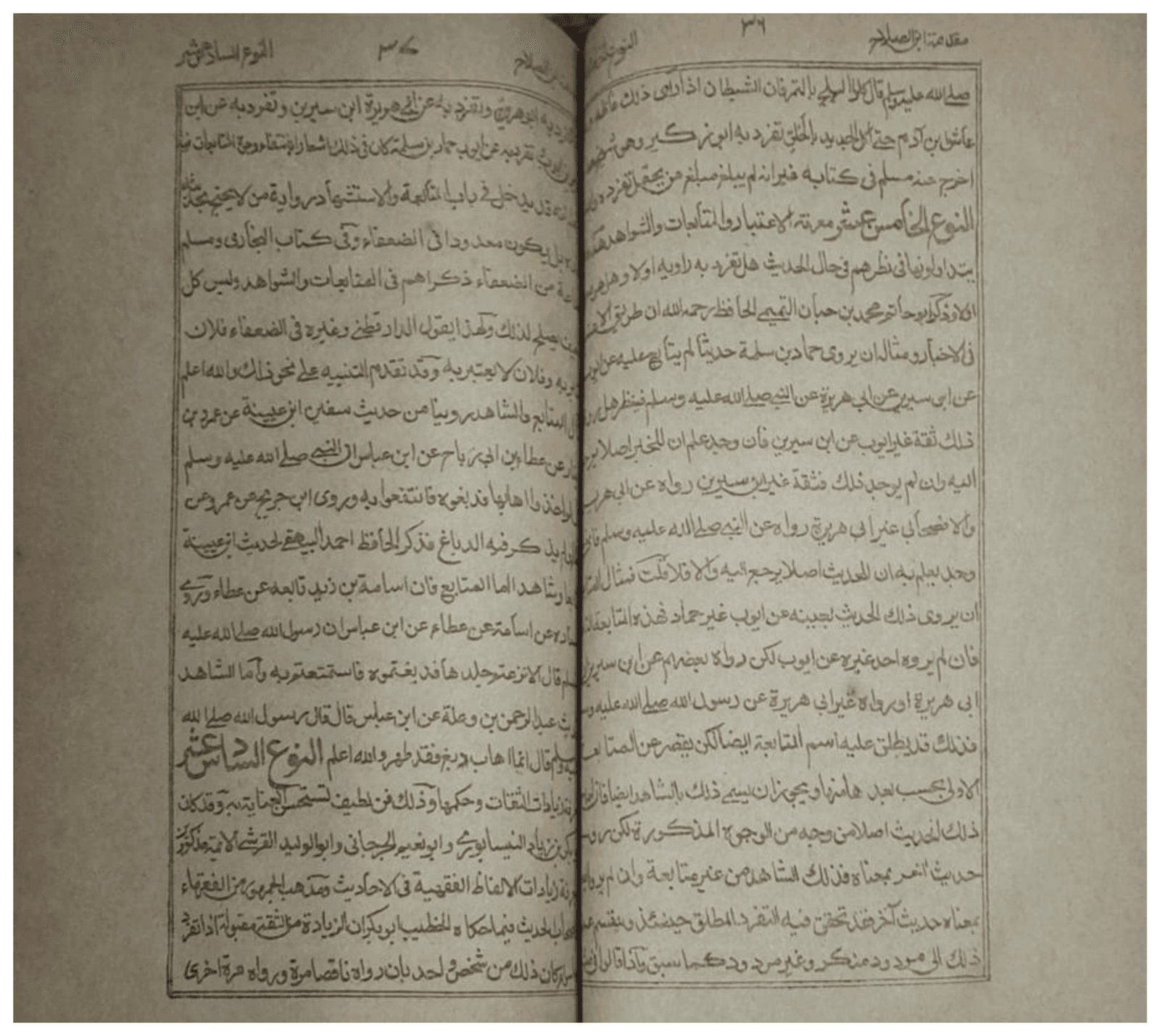 Figure 2.3. Two facing pages from the 1304/1886 Chashma Fayḍ edition of Muqaddimat Ibn al-Ṣalāḥ.
Additionally, al-Laknawī, in his autobiographical notices found in al-Fawāʾid al-Bahiyyah, ʿUmdat al-Riʿāyah, the introduction to al-Siʿāyah, al-Nāfiʿ al-kabīr, and the introduction to al-Taʿlīq al-Mumajjad, lists the books he authored, the works upon which he wrote marginalia, and the books on which he was then engaged. Among these, we do not find Muqaddimat Ibn al-Ṣalāḥ mentioned.6
Another aspect to consider is that al-Laknawī refers to Muqaddimat Ibn al-Ṣalāḥ on a number of occasions in works such as al-Rafʿ waʾl-Takmīl, Ẓafar al-Amānī, al-Ajwibah al-Fāḍilah and the introduction to al-Taʿlīq al-Mumajjad.7 However, despite these references, he nowhere mentions any active involvement in editing, annotating, publishing, or otherwise preparing the work for publication.
This is noteworthy, as he frequently informs his readers when he is actively engaged in a writing project. For example, while discussing another proposed work,8 he explains that his efforts were delayed due to his ongoing composition of al-Siʿāyah fī Kashf Mā fī Sharḥ al-Wiqāyah, describing the work in some detail and explicitly referring to his current involvement in its preparation. Similar notices appear elsewhere in his autobiographical writings. For example, regarding Ẓafar al-Amānī, he mentions in al-Taʿlīq al-Mumajjad: “I have explained it in detail in Ẓafar al-Amānī bi-Sharḥ al-Mukhtaṣar al-Mansūb ilā al-Jurjānī. May Allāh grant me success in completing it just as He granted me success in beginning it.”9
A similar pattern appears in the introduction to al-Taʿlīq al-Mumajjad. There, he provides a list of works that he had begun but had not yet completed, concluding with the same prayer that Allāh grant him success in completing them as He had granted him success in beginning them. The works he listed are: al-Maʿārif (a commentary on Sharḥ al-Mawāqif), Dāfiʿ al-Kalāl ʿan Ṭullāb Taʿlīqāt al-Kamāl ʿalā al-Ḥawāshī al-Zarmadiyyah al-Mutaʿalliqah bi-Sharḥ al-Tahdhīb liʾl-Jalāl, Taʿlīq al-Jamāl ʿalā Ḥawāshī Zāhid ʿalā Sharḥ al-Hayākil, Ḥāshiyat Badīʿ al-Mīzān, a treatise on the classification of languages (Risālah fī Tafṣīl al-Lughāt), Tabṣirat al-Baṣāʾir fī al-Awākhir, a treatise on well-known ḥadīths (Risālah fī al-Aḥādīth al-Mushtaharah), a treatise on the biographies of the virtuous people of India (Risālah fī Tarājim Fuḍalāʾ al-Hind), a treatise on abstention from singing (Risālah fī al-Zajr ʿan al-Ghināʾ), and his commentary on Sharḥ al-Wiqāyah, entitled al-Siʿāyah.10 Again, we do not find any mention of Muqaddimat Ibn al-Ṣalāḥ.
One point that should be noted is the argument that, since this edition of Muqaddimat Ibn al-Ṣalāḥ was published in 1304/1886, the very year in which al-Laknawī passed away, it could not have been supervised by him. However, this argument cannot be used to dismiss the attribution. Muqaddimat Ibn al-Ṣalāḥ and Ẓafar al-Amānī were both published together by the same publishing house in 1304/1886 before his death, as inferred by Shaykh ʿAbd al-Fattāḥ Abū Ghuddah in his introduction to Ẓafar al-Amānī.11
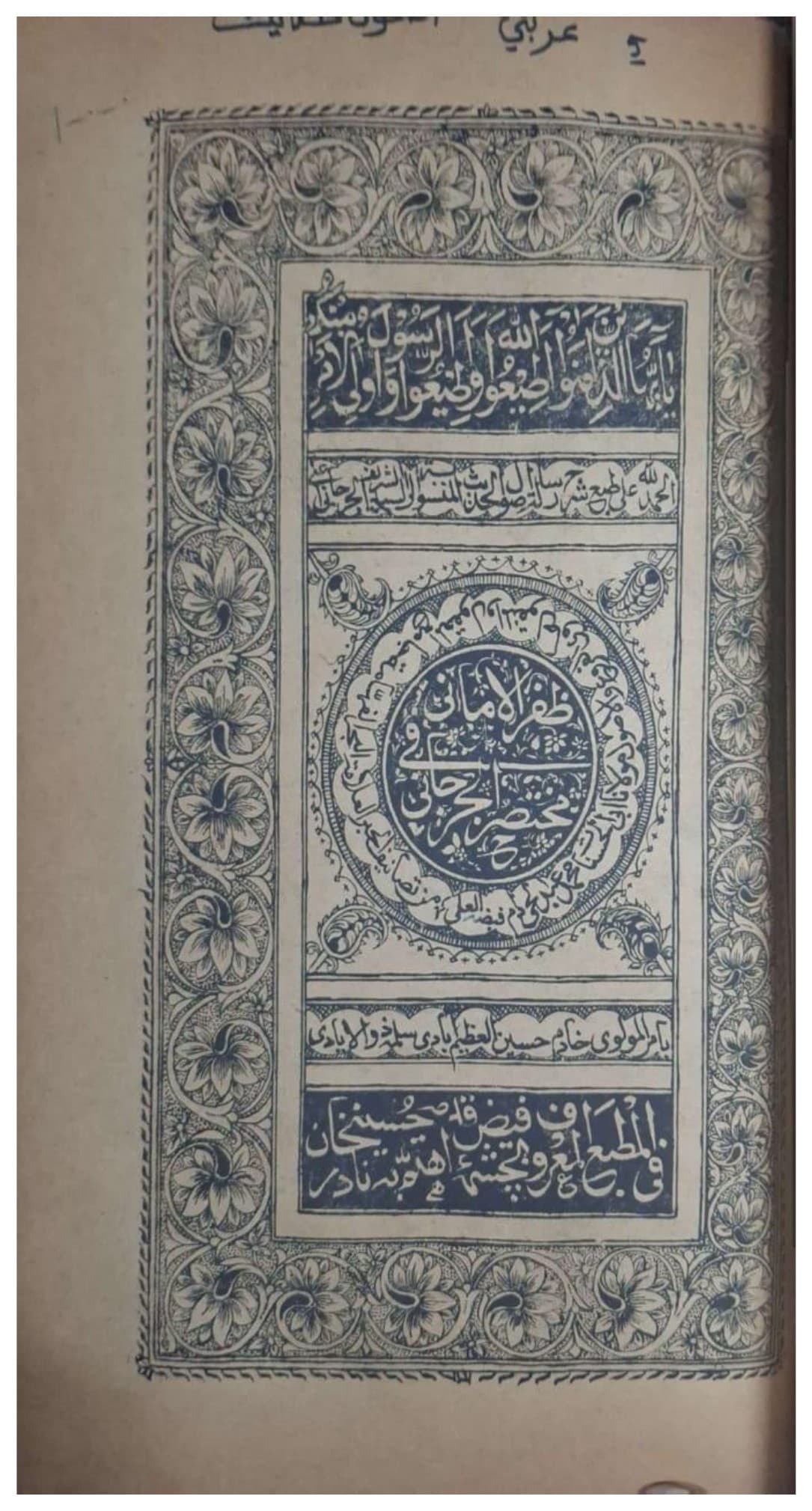 Figure 3.1. Title page of the 1304/1886 Chashma Fayḍ edition of Ẓafar al-Amānī.
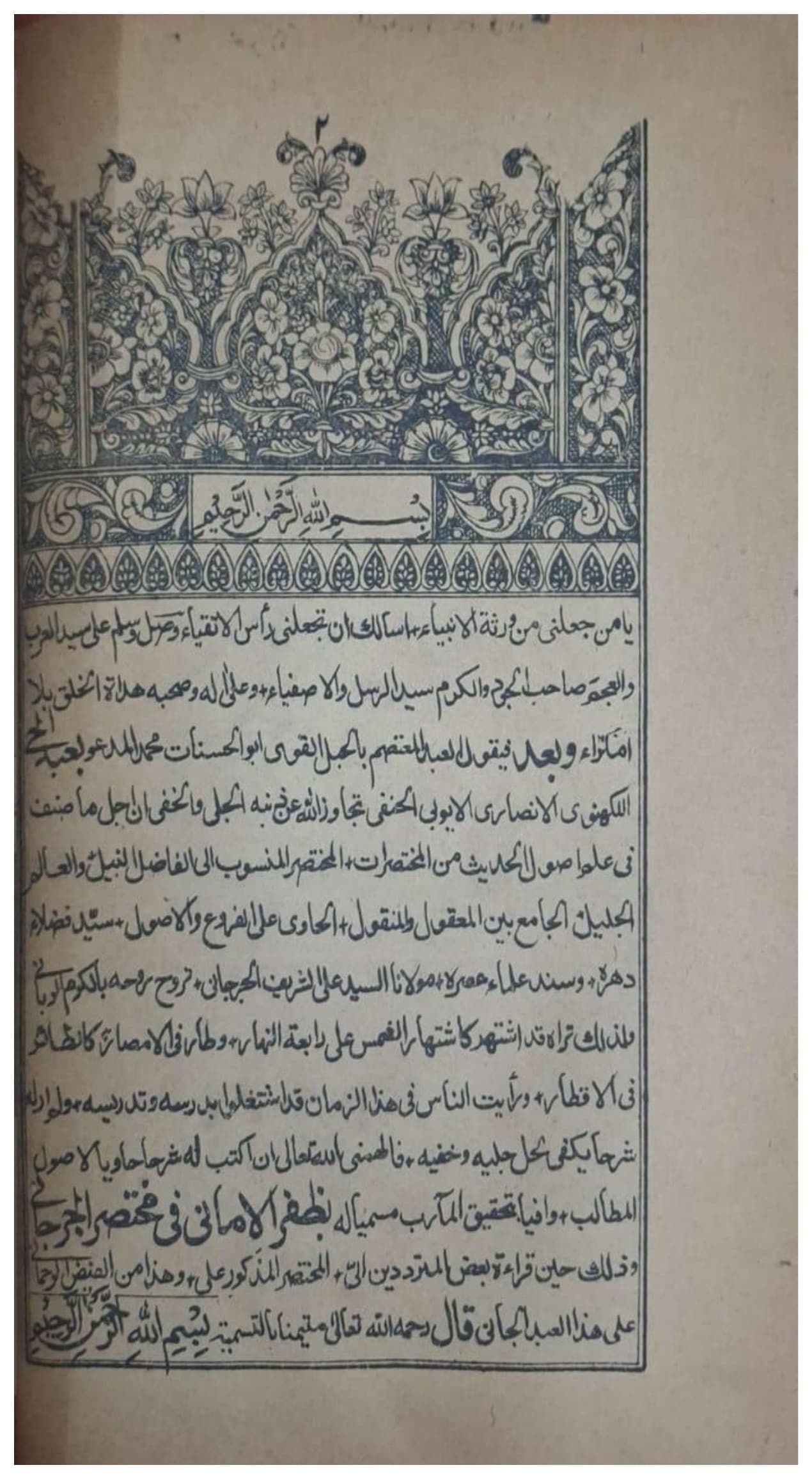 Figure 3.2. First page of the 1304/1886 Chashma Fayḍ edition of Ẓafar al-Amānī.
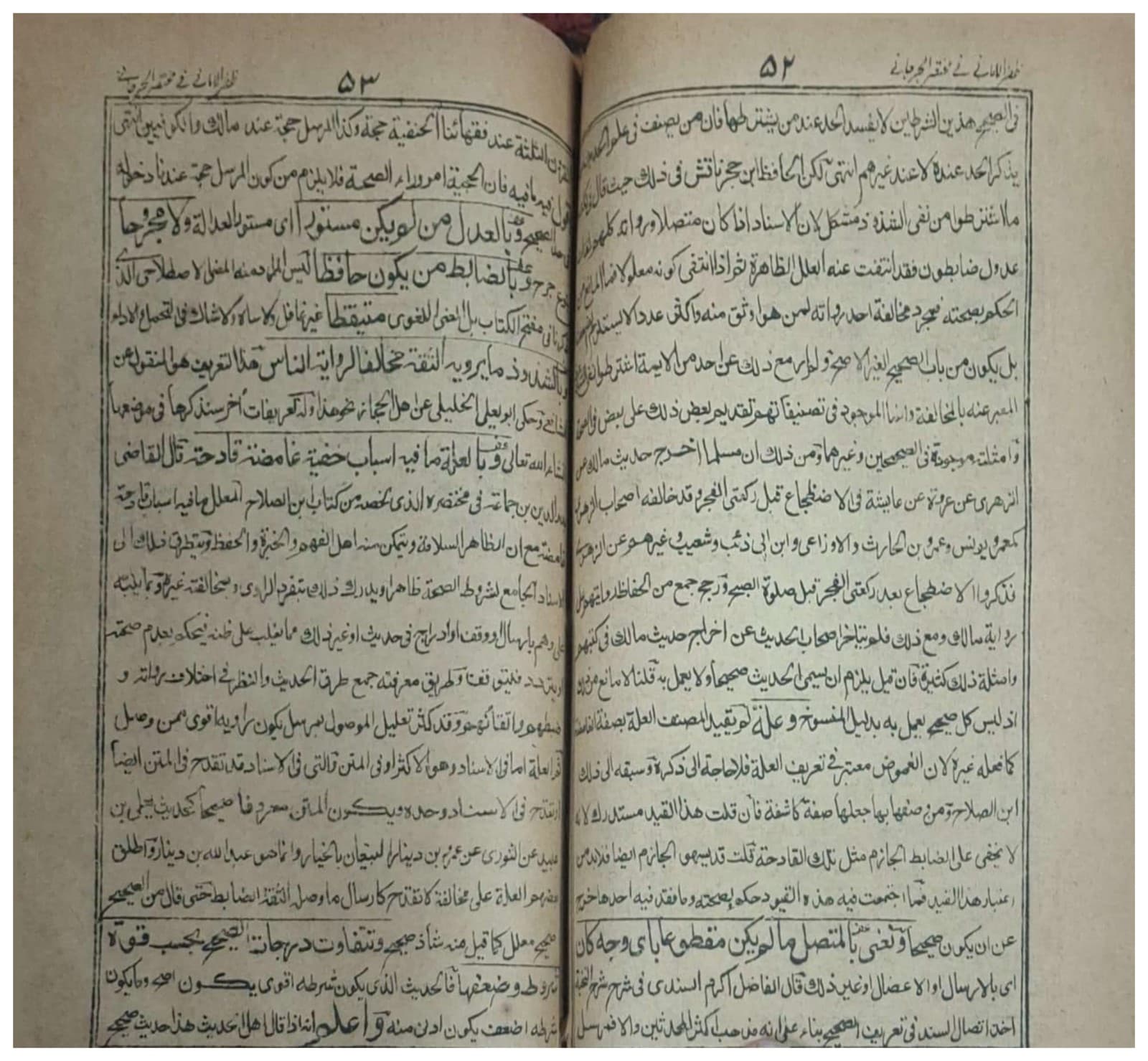 Figure 3.3. Two facing pages from the 1304/1886 Chashma Fayḍ edition of Ẓafar al-Amānī.
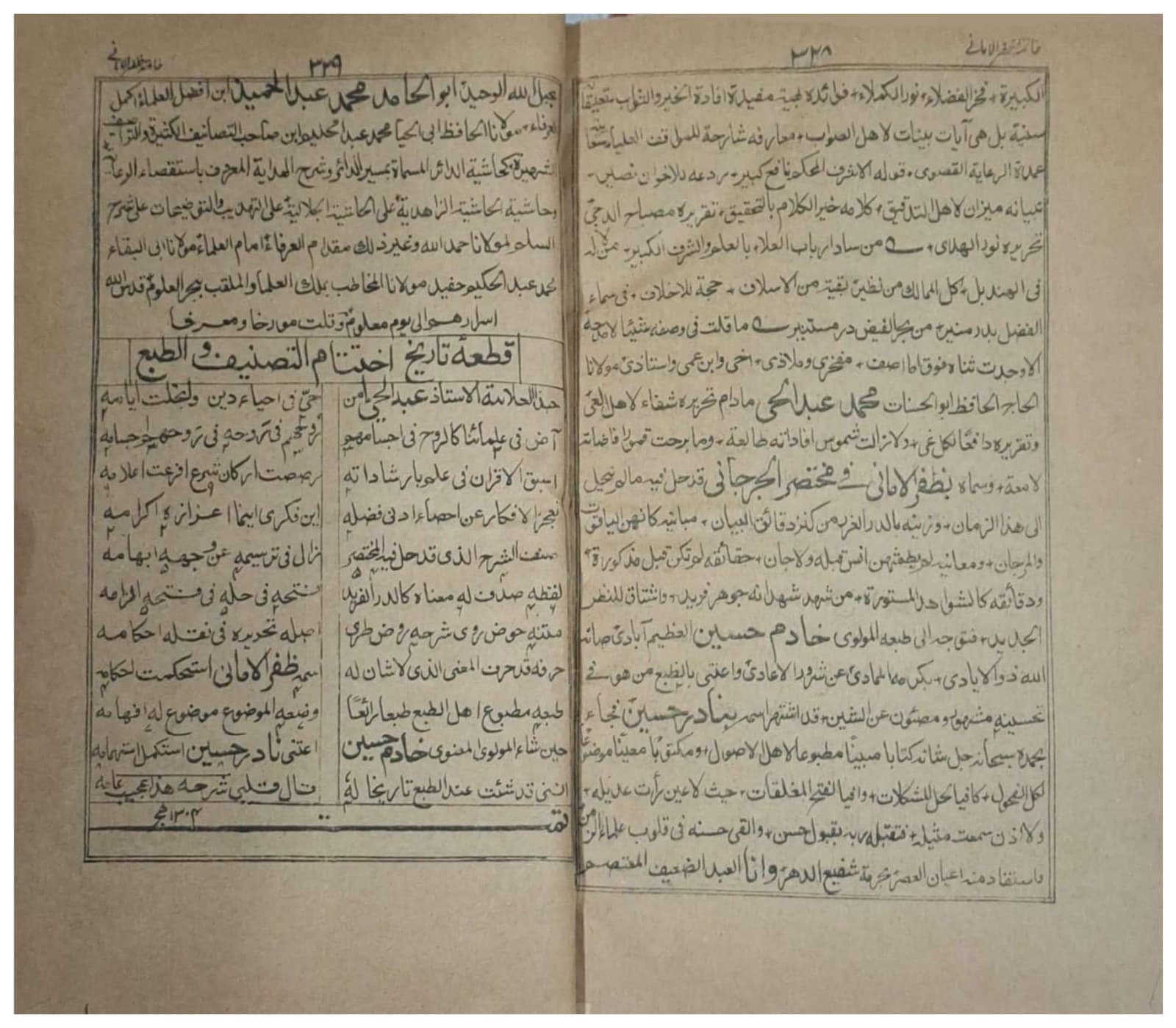 Figure 3.4. Colophon of the 1304/1886 Chashma Fayḍ edition of Ẓafar al-Amānī.
As for biographies written on Mawlānā ʿAbd al-Ḥayy al-Laknawī by others, we likewise do not find Muqaddimat Ibn al-Ṣalāḥ mentioned among the works on which he is said to have worked.12
Aḥmad Najrān, in his Bibliography of Arabic Publications in the Indo-Pakistani Subcontinent from the Introduction of the Printing Press, notes that Muqaddimat Ibn al-Ṣalāḥ and Ẓafar al-Amānī were published together in 1304/1886.13
This may provide a possible explanation for how the attribution arose. Since the two works were published together, it is conceivable that those responsible for the later Egyptian edition saw al-Laknawī’s name associated with Ẓafar al-Amānī in this catalogue and assumed that he had likewise edited or supervised the publication of Muqaddimat Ibn al-Ṣalāḥ. Interestingly, Aḥmad Najrān himself appears to have reached a similar conclusion.14
Overall, it seems the attribution of the 1304/1886 edition of Muqaddimat Ibn al-Ṣalāḥ to Mawlānā ʿAbd al-Ḥayy al-Laknawī is the result of a catalogue misreading that was subsequently repeated in later references. And Allāh knows best.15
Footnotes
-
Muwaffaq ibn ʿAbd Allāh, Tawthīq al-Nuṣūṣ wa-Ḍabṭuhā ʿinda al-Muḥaddithīn (Makkah: al-Maktabat al-Makkiyyah, 1993), 106. ↩
-
Māhir al-Faḥl, Muqaddimat Ibn al-Ṣalāḥ (Beirut: Dār al-Kutub al-ʿIlmiyyah, 2002), 55. ↩
-
Shaykh Ibrāhīm al-Lāḥim, in his commentary on Nuzhat al-Naẓar, has disagreed with this view. See Ibrāhīm al-Lāḥim, Sharḥ Nuzhat al-Naẓar (al-Madīnah: Markaz Iḥsān li-l-Dirāsāt al-Sunnah al-Nabawiyyah, 2018), 36. ↩
-
ʿUmar ibn Muḥammad Sirāj Ḥabīb Allāh, al-Ijāzāt al-Hindiyyah wa-Tarājim ʿUlamāʾihā (Manama: Maktabat Niẓām al-Yaʿqūbī al-Khāṣṣah, 2022), 5/3048. It is mentioned that he studied Persian, inheritance and the elementary sciences under him. He was from the very close students of Mawlānā ʿAbd al-Ḥayy al-Laknawī’s father and would often travel with al-Laknawī. See ʿAbd al-Ḥayy al-Laknawī, al-Siʿāyah fī Kashf Mā fī Sharḥ al-Wiqāyah (Markaz al-ʿUlamāʾ al-ʿĀlamī li-l-Dirāsāt wa-Taqniyyat al-Maʿlūmāt, 2019), 35. I was unable to find substantial information about him in the sources available to me. If any reader is aware of additional information or relevant sources, I would be grateful to hear from them. ↩
-
For his entry, see ʿUmar ibn Muḥammad Sirāj Ḥabīb Allāh, al-Ijāzāt al-Hindiyyah wa-Tarājim ʿUlamāʾihā (Manama: Maktabat Niẓām al-Yaʿqūbī al-Khāṣṣah, 2022), 2:848. ↩
-
ʿAbd al-Ḥayy al-Laknawī, al-Fawāʾid al-Bahiyyah fī Tarājim al-Ḥanafiyyah, with al-Taʿlīqāt al-Saniyyah ʿalā al-Fawāʾid al-Bahiyyah (Cairo: Maṭbaʿat al-Saʿādah, 1324 AH), 248–249; ʿUmdat al-Riʿāyah ʿalā Sharḥ al-Wiqāyah (Lebanon: Dār al-Kutub al-ʿIlmiyyah, 2009), 1:135–140; al-Nāfiʿ al-kabīr li-Man Yuṭāliʿ Jāmiʿ al-Ṣaghīr (Karachi: Idārat al-Qurʾān wa-al-ʿUlūm al-Islāmiyyah), 60–66; al-Taʿlīq al-Mumajjad (Damascus: Dār al-Qalam, 2005), 1/109–113. ↩
-
See for example: ʿAbd al-Ḥayy al-Laknawī, al-Rafʿ waʾl-Takmīl fī al-Jarḥ waʾl-Taʿdīl (Beirut: Dār al-Bashāʾir al-Islāmiyyah, 2016), 92, 105, 188, 221; al-Ajwibah al-Fāḍilah liʾl-Asʾilah al-ʿAsharah al-Kāmilah (Beirut: Dār al-Bashāʾir al-Islāmiyyah, 2016), 85; Ẓafar al-Amānī bi-Sharḥ Mukhtaṣar al-Sayyid al-Sharīf al-Jurjānī (Cairo: Dār al-Salām, 2016), 44, 121, 361, 476, 557–558; al-Taʿlīq al-Mumajjad (Damascus: Dār al-Qalam, 2005), 1/77. For the sake of brevity, I have mentioned only a few examples. Nevertheless, in the works cited here, as well as in others not listed, where he quotes Ibn al-Ṣalāḥ’s Muqaddimah, I have found no indication that he edited, annotated, or otherwise contributed to the text. ↩
-
ʿAbd al-Ḥayy al-Laknawī, Iqāmat al-Ḥujjah ʿalā Anna al-Ikthār fī al-Taʿabbud Laysa bi-Bidʿah (Beirut: Dār al-Bashāʾir al-Islāmiyyah, 2014), 13. ↩
-
ʿAbd al-Ḥayy al-Laknawī, al-Taʿlīq al-Mumajjad (Damascus: Dār al-Qalam, 2005), 1/146. ↩
-
Ibid., 1/112. ↩
-
ʿAbd al-Ḥayy al-Laknawī, Ẓafar al-Amānī (Cairo: Dār al-Salām, 2016), 8–9. Shaykh ʿAbd al-Fattāḥ Abū Ghuddah inferred this from the colophon (refer to Figure 3.4). One indication is that one of al-Laknawī’s students, Shaykh Abū al-Ḥāmid Muḥammad ibn ʿAbd al-Ḥamīd, whilst referring to al-Laknawī, does not employ a posthumous formula such as raḥimahu Allāh, but instead offers a prayer that the benefits of the scholar’s teachings continue to shine. While this may suggest that al-Laknawī was still alive when the passage was written, the evidence is not conclusive, since such expressions can also be used in praise of deceased scholars. A more substantial indication that Shaykh Abū Ghuddah mentions is the editorial convention found at the end of al-Laknawī’s annotations: al-Laknawī would conclude his notes with the word minhu (“from him”), indicating that the annotation belonged to the author of the original work, and publishers would then append either sallamahu al-Mawlā (“may the Lord preserve him”) when the work was printed during the author’s lifetime, or raḥimahu Allāh (“may Allāh have mercy on him”) when it was printed after his death. The source explicitly states that the former formula appears in this book, while the latter is found in works printed after al-Laknawī’s demise that contain his annotations. ↩
-
See Walī al-Dīn al-Nadwī, al-Imām ʿAbd al-Ḥayy al-Laknawī: ʿAllāmat al-Hind wa-Imām al-Muḥaddithīn wa-al-Fuqahāʾ (Dimashq: Dār al-Qalam, 1995), 158; see ʿUmar ibn Muḥammad Sirāj Ḥabīb Allāh, al-Ijāzāt al-Hindiyyah wa-Tarājim ʿUlamāʾihā (Manama: Maktabat Niẓām al-Yaʿqūbī al-Khāṣṣah, 2022), 5/3050; see Qiyām al-Dīn ʿAbd al-Bārī Farangī Maḥallī, ʿUlamāʾ-i Farangī Maḥall (Delhi: Idārat Fikr Islāmī, 2020), 271–276. ↩
-
See Aḥmad Najrān, Muʿjam al-Maṭbūʿāt al-ʿArabiyyah fī Shibh al-Qārah al-Hindiyyah al-Bākistāniyyah Mundhu Dukhūl al-Maṭbaʿah Ilayhā Ḥattā ʿĀm 1980 (Riyadh: Maktabat al-Malik Fahd al-Waṭaniyyah, 2000), 254. See Figures 2.1–2.3 and 3.1–3.4 for the original 1304/1886 Chashma Fayḍ editions of both books. ↩
-
I am grateful to Mawlānā Haroon Anis for drawing my attention to this passage and for his valuable engagement with me regarding this explanation. ↩
-
The author welcomes constructive feedback, critiques and further suggestions. ↩