The diagram below summarises the five grades of aḥādīth set out in the preceding entries. Ṣaḥīḥ li-dhātihi and ḥasan li-dhātihi are sound in themselves. Ṣaḥīḥ li-ghayrihi and ḥasan li-ghayrihi are strengthened by other routes: a ḥasan li-dhātihi rises to ṣaḥīḥ, and a ḍaʿīf rises to ḥasan. Ḍaʿīf is whatever fails the conditions of acceptance.
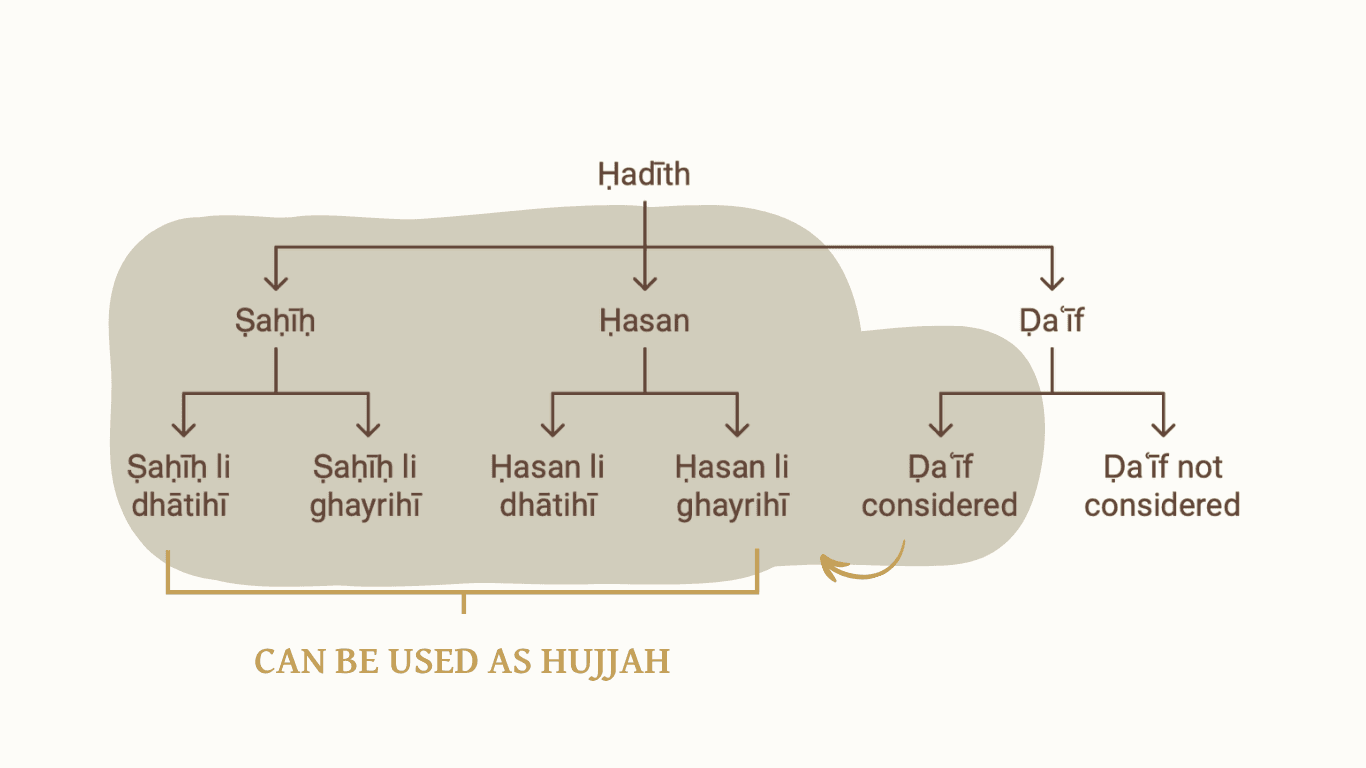 Summary of aḥādīth in terms of acceptance and rejection
Khabar al-wāḥid is categorised, with respect to acceptance and rejection, into al-ṣaḥīḥ, al-ḥasan and al-ḍaʿīf.
When the routes of a ḥasan li-dhātihi narration multiply, the ḥadīth is upgraded to al-ṣaḥīḥ li-ghayrihi (the sound by virtue of something other than itself).
If the retention (ḍabṭ) is light while the other attributes of ṣaḥīḥ remain present, it is al-ḥasan li-dhātihi (the fair in itself).
If a ḥadīth of slight weakness comes through multiple routes, it becomes al-ḥasan li-ghayrihi (the fair by virtue of something other than itself).
