
Islām and Īmān
الإسلام والإيمان
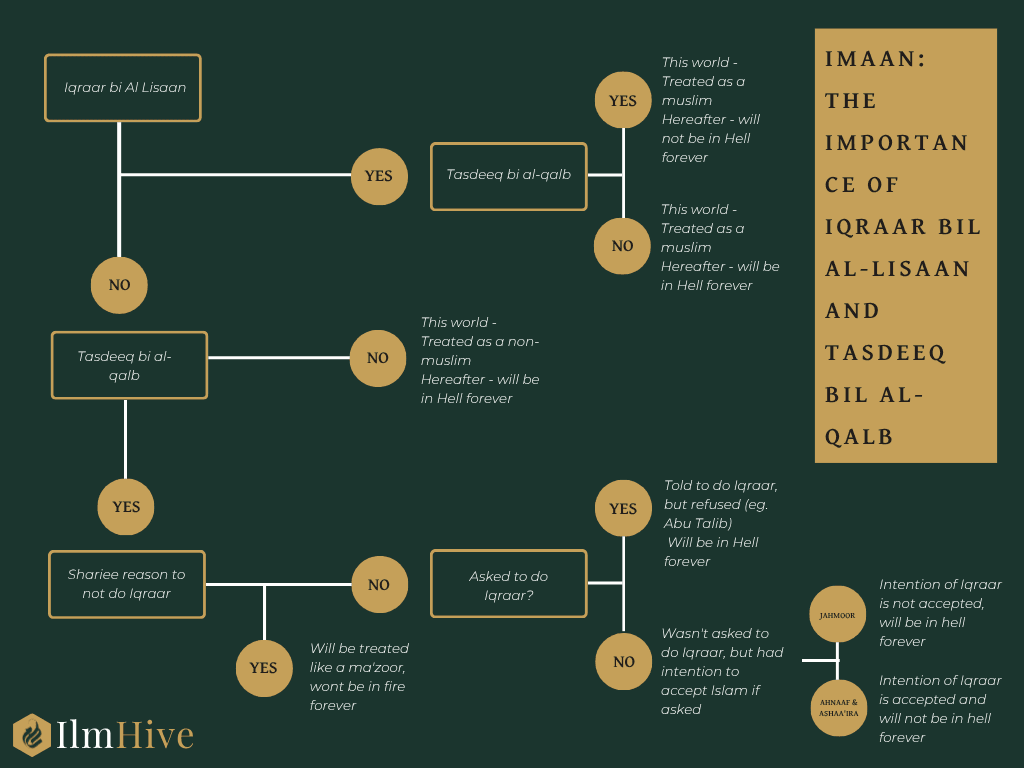 The two components of īmān: taṣdīq bi al-qalb (affirmation in the heart) and iqrār bi al-lisān (affirmation with the tongue)
Islām is a way of life. Another definition of Islām is inqiyād ẓāhirī, the outward manifestation of taṣdīq through action.
Īmān may be thought of as taṣdīq bi al-qalb (affirmation in the heart), and Islām as aʿmāl (actions).
The two words, Islām and īmān, may seem to differ in meaning. Consider the following āyah:
Even though Islām and īmān may differ in essence, in the sharīʿah they are bound closely together for practical purposes. For īmān to be recognised, an element of Islām must be present: a person is held to have īmān only when that īmān shows itself in his Islām, that is, in his actions.
Iqrār (affirmation) is a binding tenet of īmān, and Islām is a condition of it. Two things that differ in essence can still depend on one another: take the sun and daytime, distinct in themselves, yet daytime cannot occur without the sun.
The Importance of Iqrār bi al-lisān for Īmān to Be Accepted
For the rulings of Muslims to apply in this world, iqrār bi al-lisān (affirmation with the tongue) is a condition by consensus of the scholars: that is, a person who has taṣdīq but no iqrār does not come under the rulings of Muslims in this world.