
Ṣalāt al-Marīḍ
Ṣalāh is the second pillar of Islām. We thank Allāh for giving us the ability to pray to Him.
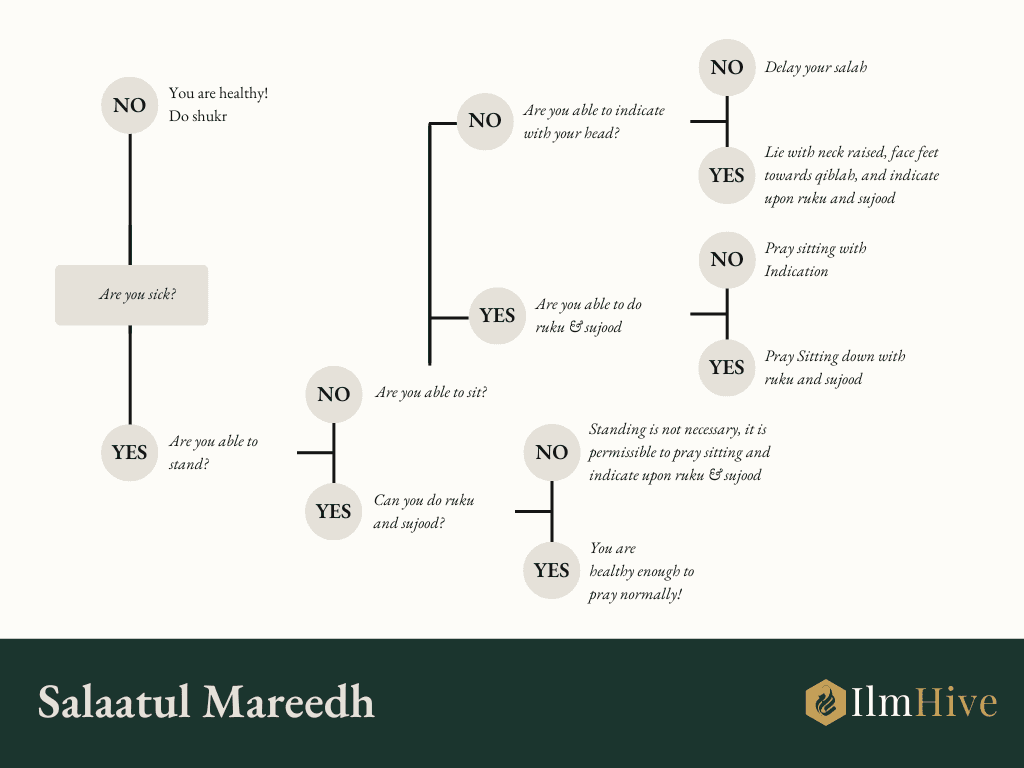
- When a sick person is unable to stand, he prays sitting, with rukūʿ and sujūd as usual.
- If he cannot perform rukūʿ and sujūd, he indicates them with his head, with the sujūd deeper than the rukūʿ. He does not raise an object up to his head to prostrate against.
- If he cannot sit, he lies on his back with his feet towards the qiblah and indicates rukūʿ and sujūd. Lying on his side with his face towards the qiblah and indicating is also permitted.
- If he cannot indicate with his head, he postpones the ṣalāh. He does not indicate with his eyes, nor with his eyebrows, nor with his heart alone.
- If he is able to stand but unable to perform rukūʿ and sujūd, standing is not required: he may pray sitting and indicate, and this is preferable to standing and indicating.
- If a healthy person begins the ṣalāh standing and is then taken ill, he completes it sitting with rukūʿ and sujūd. If unable to perform rukūʿ and sujūd, he indicates them; if unable to sit, he reclines.
- If a man prays sitting with rukūʿ and sujūd on account of illness and recovers during the prayer, he completes what remains standing.
- If he prays part of the ṣalāh by indication and then becomes able to perform rukūʿ and sujūd, he restarts the prayer.
- Whoever is unconscious for five prayers or fewer must make up the missed prayers once he is able.
- Whoever is unconscious for more than five prayers does not make them up.