
Nawwāb Ṣiddīq Ḥasan Khān and the First Printed Edition of Fatḥ al-Bārī: Revisiting the Būlāq Publication of 1300/1883
Among the six canonical collections of ḥadīth, the work described as the most authentic is the Ṣaḥīḥ of Imām Muḥammad b. Ismāʿīl al-Bukhārī (d. 256 AH/870 CE). More than a millennium after its compilation, it continues to occupy a central place in the teaching and study of ḥadīth throughout the Islamic world.
Within a century of al-Bukhārī's death, scholars had already begun composing commentaries on the Ṣaḥīḥ.1 This rich exegetical tradition continued to flourish until the appearance of the Cairene ḥadīth scholar al-Ḥāfiẓ Ibn Ḥajar al-ʿAsqalānī (d. 852 AH/1449 CE), whose monumental commentary, Fatḥ al-Bārī ("The Opening of the Creator"), eclipsed all of its predecessors and came to occupy a pre-eminent position among the standard commentaries on Ṣaḥīḥ al-Bukhārī.
The esteem in which Ibn Ḥajar himself held Fatḥ al-Bārī is reflected in the testimony of his student al-Ḥāfiẓ al-Sakhāwī. In his biographical notice of Ibn Ḥajar, al-Sakhāwī records that his teacher regarded only five of his own works with complete satisfaction: Fatḥ al-Bārī, its introduction Hudā al-Sārī, al-Mushtabah, Tahdhīb al-Tahdhīb, and Lisān al-Mīzān.2
Ibn Ḥajar initially began composing a far more expansive commentary on Ṣaḥīḥ al-Bukhārī, completing approximately one volume before deciding that such a work would likely never be finished. He therefore embarked upon a more concise, though still comprehensive, commentary. Having completed its introduction, Hudā al-Sārī3, in 813 AH, he began writing Fatḥ al-Bārī itself in 817 AH. Approximately five years into the project, he enlisted a group of accomplished students to collate, review, and refine each fascicle before it was incorporated into the completed work, a meticulous editorial process that inevitably slowed its progress. The commentary was finally completed in Rajab 842 AH.4
Despite its immense scholarly importance, Fatḥ al-Bārī circulated exclusively in manuscript form for more than four centuries. With the advent of printing in the Muslim world, however, it was among the earlier major works of the classical Islamic tradition to appear in print. Its first printed edition was produced in the nineteenth century, when Nawwāb5 Ṣiddīq Ḥasan Khān6 commissioned its publication at al-Maṭbaʿah al-Kubrā al-Amīriyyah (the Great Amiri Press), better known as the Būlāq Press7 in Cairo8, under the patronage of Shāh Jahān Begum9.
The publication of Fatḥ al-Bārī formed part of Ṣiddīq Ḥasan Khān's wider programme of preserving, publishing, and disseminating the classical heritage of ḥadīth. As one of the leading representatives of the Ahl-i Ḥadīth movement10, he devoted considerable resources to acquiring rare Arabic manuscripts, many of which were either unknown or unavailable in India. His marriage to Shāh Jahān Begum, the ruler of Bhopal11, provided him with the financial resources and institutional support necessary to pursue this ambitious undertaking.
To facilitate the acquisition of manuscripts, Khān established an extensive network of agents and scholarly associates extending across the Middle East, the Ottoman Empire, North Africa, and the Indian subcontinent. Through this network he located rare manuscripts, purchased them where possible, commissioned copies when originals could not be obtained, and subsequently arranged for their distribution to scholars and institutions throughout the Islamic world. The breadth of this network is illustrated by a list published by Aḥmad Fāris Afandī on the final page of his newspaper al-Jawāʾib (1297 AH) and reproduced by ʿAlī Ḥasan Khān.12 It included representatives in Egypt, Alexandria, Beirut, Jeddah, Constantinople, Aden, Basra, Baghdad, Tunis, Makkah, Bombay, Lahore, Delhi, Kanpur, and Bhopal.13
Although the Būlāq edition of Fatḥ al-Bārī has long been recognised as the first printed edition of Ibn Ḥajar's celebrated commentary, comparatively little attention has been devoted to identifying the manuscript from which it was printed or tracing the circumstances of its acquisition. The surviving correspondence examined in this study provides an opportunity to reconstruct that process in some detail.
The need to acquire a reliable manuscript was particularly acute because complete copies of Fatḥ al-Bārī were exceptionally scarce in nineteenth-century India. Sayyid Nadhīr Ḥusayn Dihlawī (1805–1902)14 lamented that "no one even knew Fatḥ al-Bārī, for in all of Delhi there were only parts of it, scattered among three places."15 Ṣiddīq Ḥasan Khān similarly records in his autobiography, Ibqāʾ al-Minan16, that no complete manuscript of Fatḥ al-Bārī had ever been seen, or even heard of, in India. His son, ʿAlī Ḥasan Khān, goes even further, claiming that not a single copy existed in the country.17 This latter statement, however, appears to be somewhat exaggerated, as Mawlānā Aḥmad ʿAlī Sahāranpūrī (1810–1880), a contemporary of Ṣiddīq Ḥasan Khān, clearly had access to the work and even summarised portions of it in his marginalia on his edition of Ṣaḥīḥ al-Bukhārī.18
Against this background, the acquisition of a complete and reliable manuscript of Fatḥ al-Bārī assumed considerable importance. The surviving documentary evidence demonstrates that obtaining such a manuscript was neither immediate nor straightforward. Rather, it was the culmination of a prolonged effort involving trusted intermediaries in Yemen, repeated negotiations with booksellers, substantial financial expenditure, and the coordinated movement of manuscripts between the Arabian Peninsula and Bhopal.
To the best of my knowledge, the correspondence preserved in al-Rasāʾil al-Mutabādalah has not previously been examined to reconstruct the procurement of the manuscript that formed the basis of the first printed edition of Fatḥ al-Bārī. Read together with the biographical accounts of Ṣiddīq Ḥasan Khān and his son, these letters permit the provenance of the manuscript and the circumstances surrounding its acquisition to be reconstructed in remarkable detail.
ʿAlī Ḥasan Khān records that, during Nawwāb Ṣiddīq Ḥasan Khān's stay in Ḥudayda, he devoted himself to searching for and copying ḥadīth works. He notes that Ṣiddīq Ḥasan Khān personally transcribed twenty-five treatises of al-Ṣanʿānī and acquired a number of important books there, including Iqtiḍāʾ al-Ṣirāṭ al-Mustaqīm, Irshād al-Fuḥūl, the first half of Nayl al-Awṭār, Fatḥ al-Qadīr, and several other works.19
Significantly, Fatḥ al-Bārī is absent from this list, indicating that the manuscript was not acquired during Ṣiddīq Ḥasan Khān's stay in Ḥudayda. Elsewhere in the same biography, however, ʿAlī Ḥasan Khān explains that his father subsequently continued to obtain rare manuscripts from the Arab world, including the works of Ibn Ḥajar al-ʿAsqalānī, al-Dhahabī, al-Shaʿrānī, al-Mundhirī, al-Isfarāyinī, Ibn al-Jawzī, al-Suyūṭī, Ibn al-Qayyim, Ibn Taymiyyah, al-Ṣanʿānī, and al-Shawkānī. He adds that many of these works were unobtainable in India, while others survived only as autograph manuscripts or copies dating back several centuries.20
Ṣiddīq Ḥasan Khān himself provides a valuable glimpse into this enterprise in his autobiography, Ibqāʾ al-Minan21. Reflecting upon the scarcity of works by earlier scholars, he remarks that many rare works were acquired only after considerable effort and at substantial expense from the Arab lands and beyond. Referring specifically to Fatḥ al-Bārī, he states that he acquired a complete copy from Ḥudayda for six hundred rupees, together with the autograph manuscript of Ibn ʿAllān22. He further records that he spent an additional fifty thousand rupees to have this manuscript printed at the Būlāq Press in Cairo, adding that it subsequently became the exemplar from which numerous Indian editions were produced.23
The surviving correspondence preserved in al-Rasāʾil al-Mutabādalah24 provides a detailed account of the manuscript's acquisition, revealing the central role played by Shaykh Ḥusayn ibn Muḥsin al-Anṣārī25, who acted as Ṣiddīq Ḥasan Khān's trusted intermediary in Yemen.26
The correspondence begins in Jumādā al-Ūlā 1291 AH (June–July 1874 CE)27, when Ṣiddīq Ḥasan Khān wrote to Ḥusayn enquiring whether a copy of Fatḥ al-Bārī could be obtained. The reply was discouraging: no copy was then available for sale. Nearly a year later, however, in Jumādā al-Ākhirah 1292 AH (July–August 1875 CE)28, Ḥusayn informed him that a suitable manuscript had finally been located. He describes it as an exceptionally reliable copy, two of whose volumes were written in the hand of Imām Aḥmad ibn ʿAllān (see Figures 1.1–1.7). The manuscript had previously belonged to the descendants of al-Faqīh ʿUmar al-Sindī and was known to both al-Qāḍī Zayn al-ʿĀbidīn and Ḥakīm Muḥammad Aḥsan, thereby further establishing its scholarly provenance.
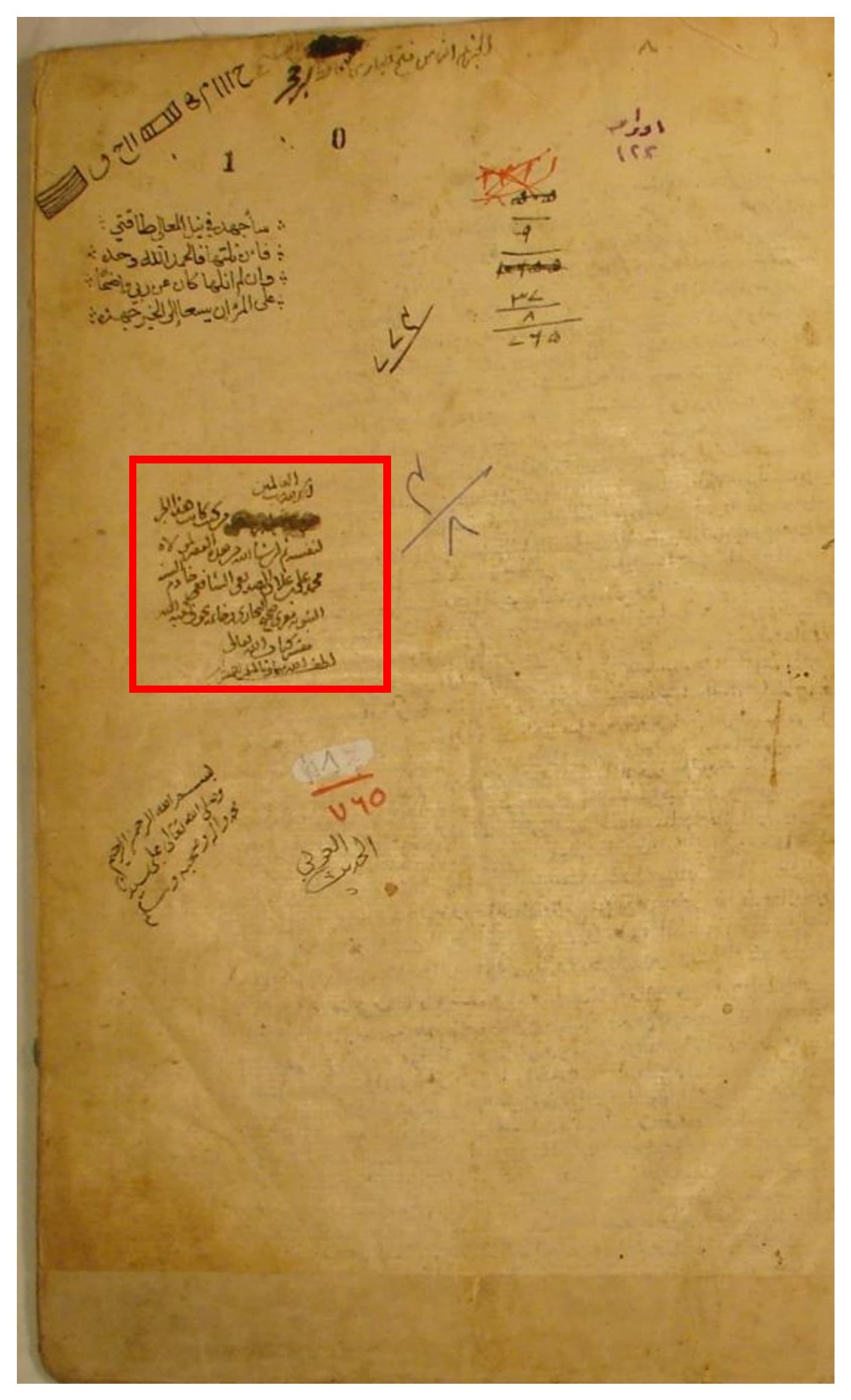 Figure 1.1. A folio of Fatḥ al-Bārī in the handwriting of Ibn ʿAllān; the boxed area records that Ibn ʿAllān read Ṣaḥīḥ al-Bukhārī and completed it in the Kaʿbah. Courtesy of the Shiblī Library, Nadwat al-ʿUlamāʾ, Lucknow.
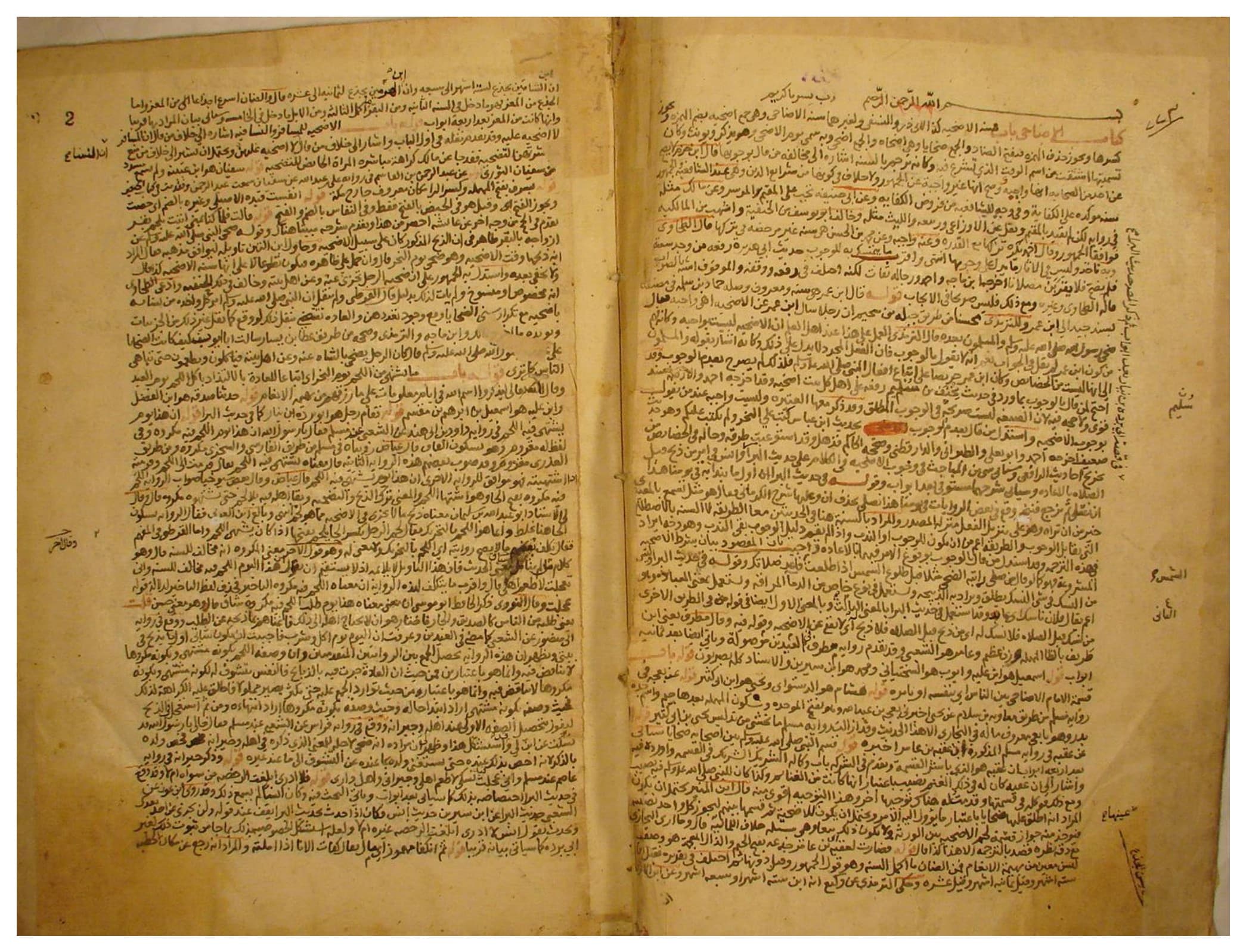 Figure 1.2. Folios of the Ibn ʿAllān manuscript of Fatḥ al-Bārī.
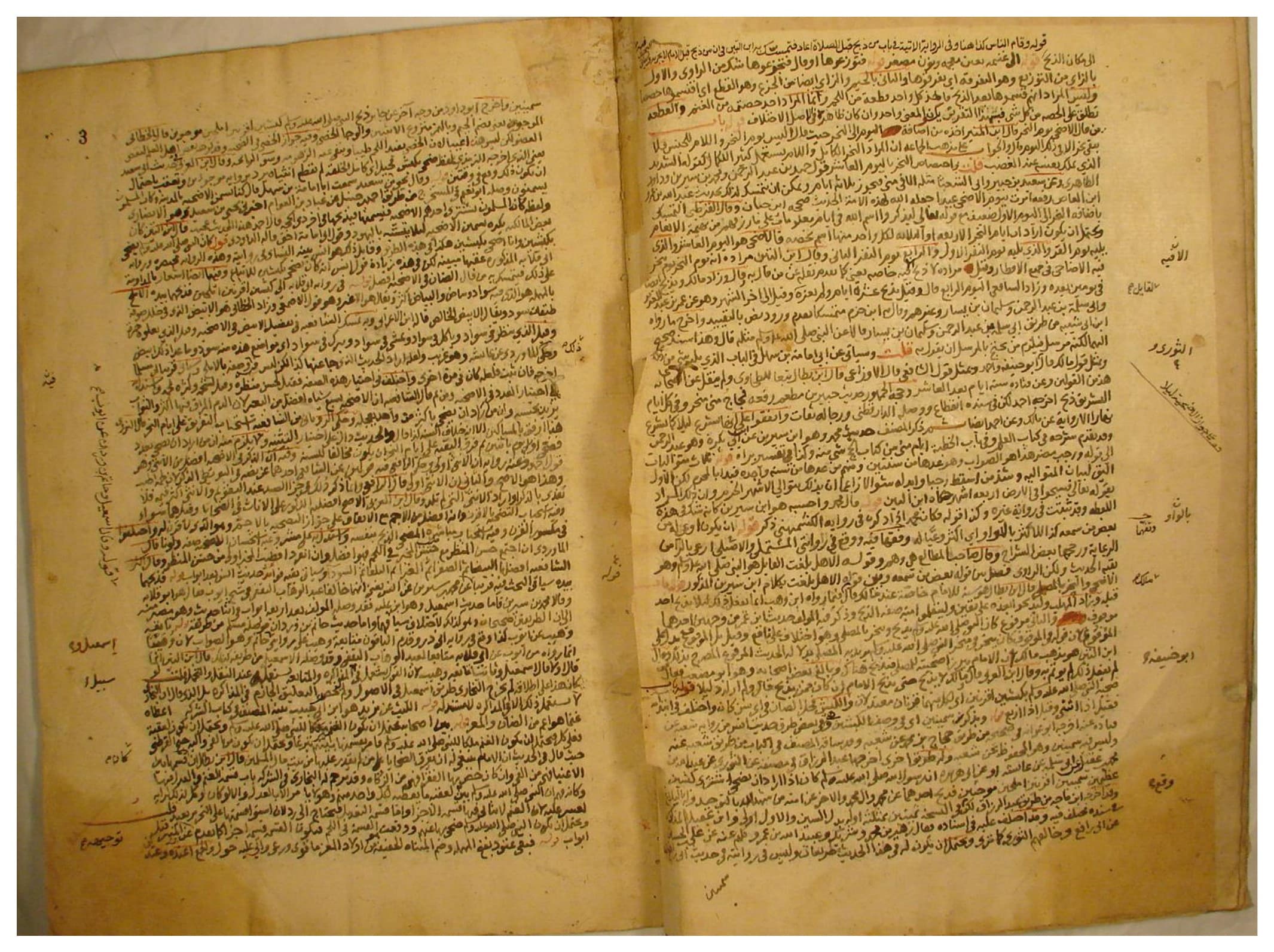 Figure 1.3. Folios of the Ibn ʿAllān manuscript of Fatḥ al-Bārī.
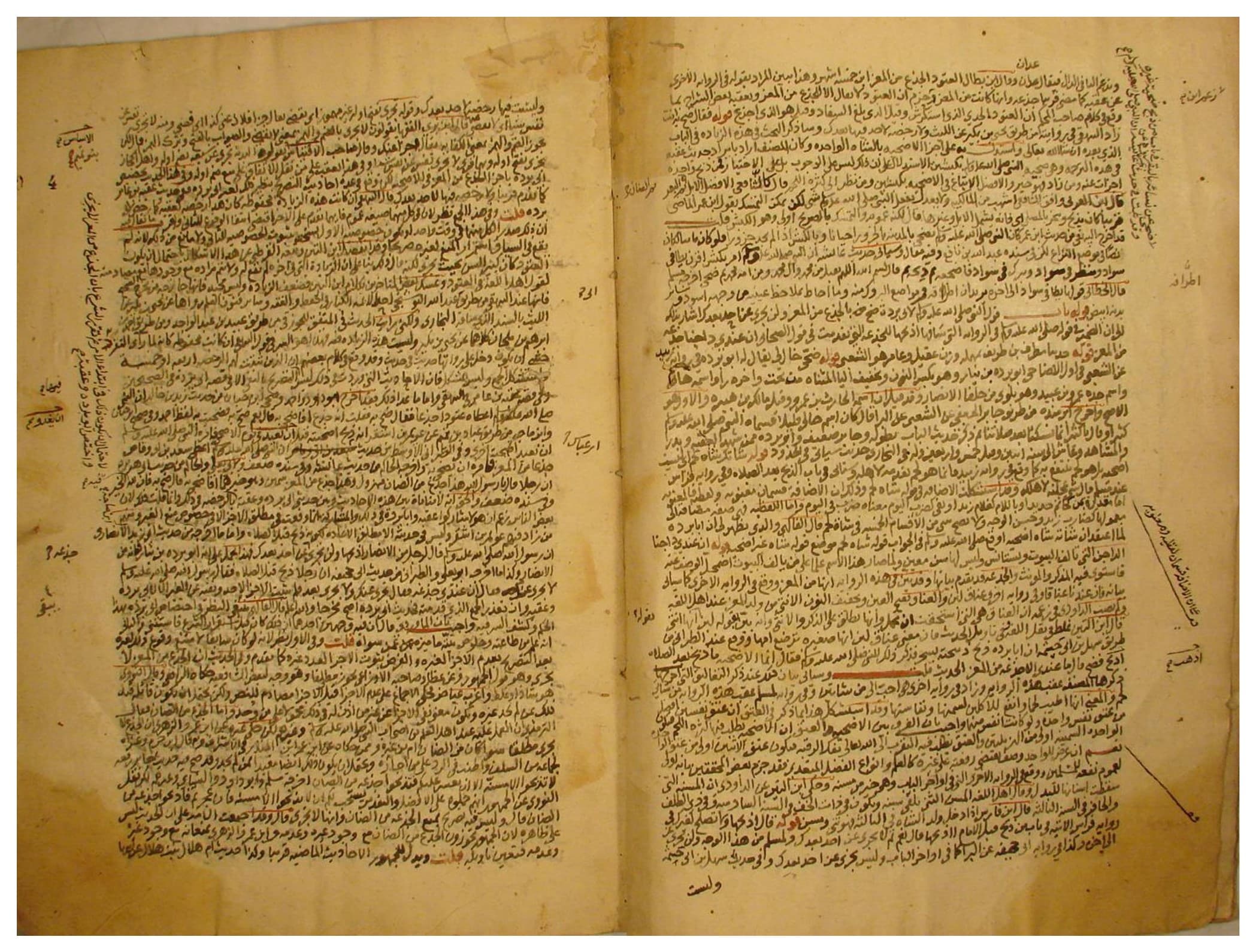 Figure 1.4. Folios of the Ibn ʿAllān manuscript of Fatḥ al-Bārī.
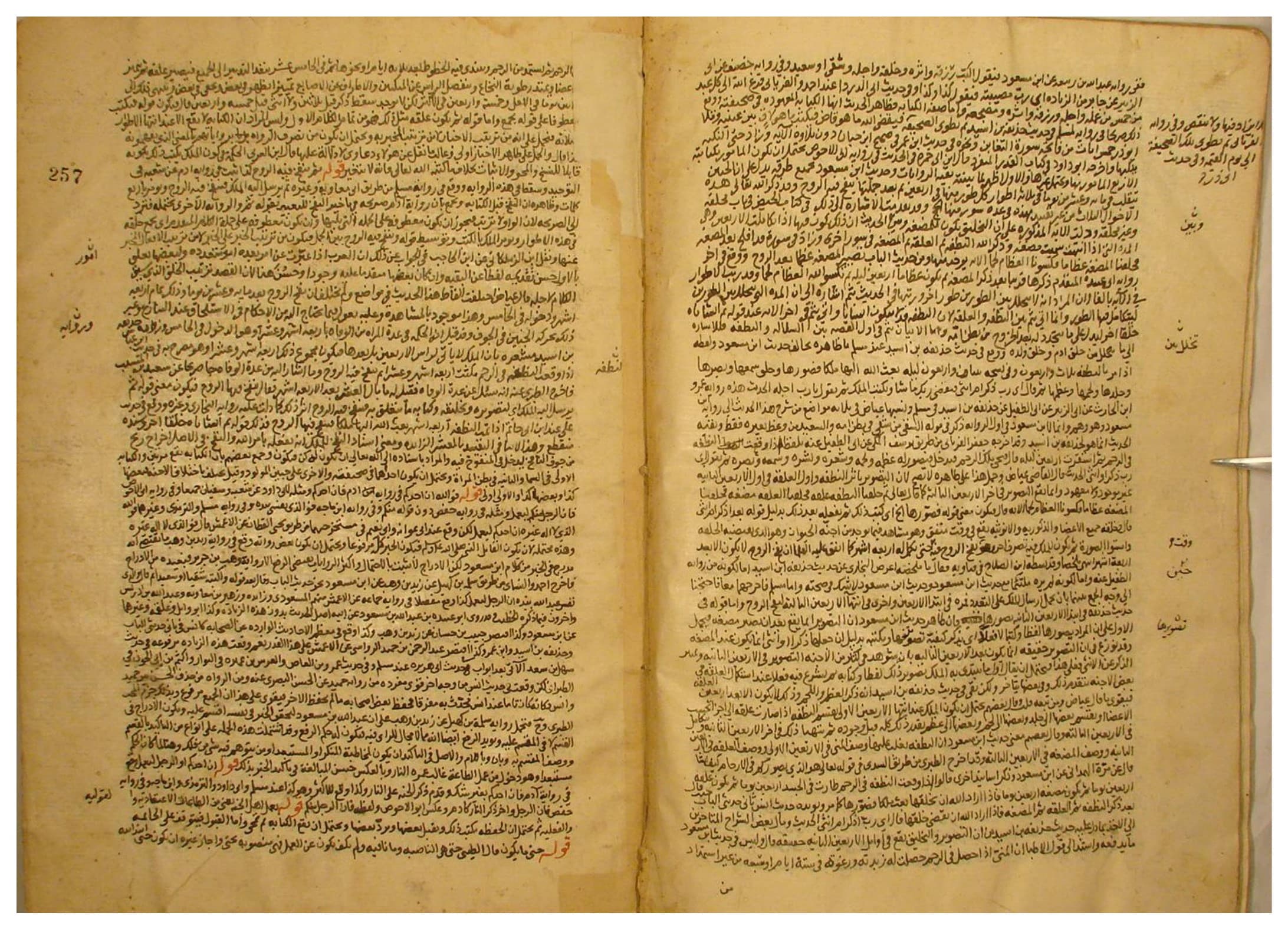 Figure 1.5. Folios of the Ibn ʿAllān manuscript of Fatḥ al-Bārī.
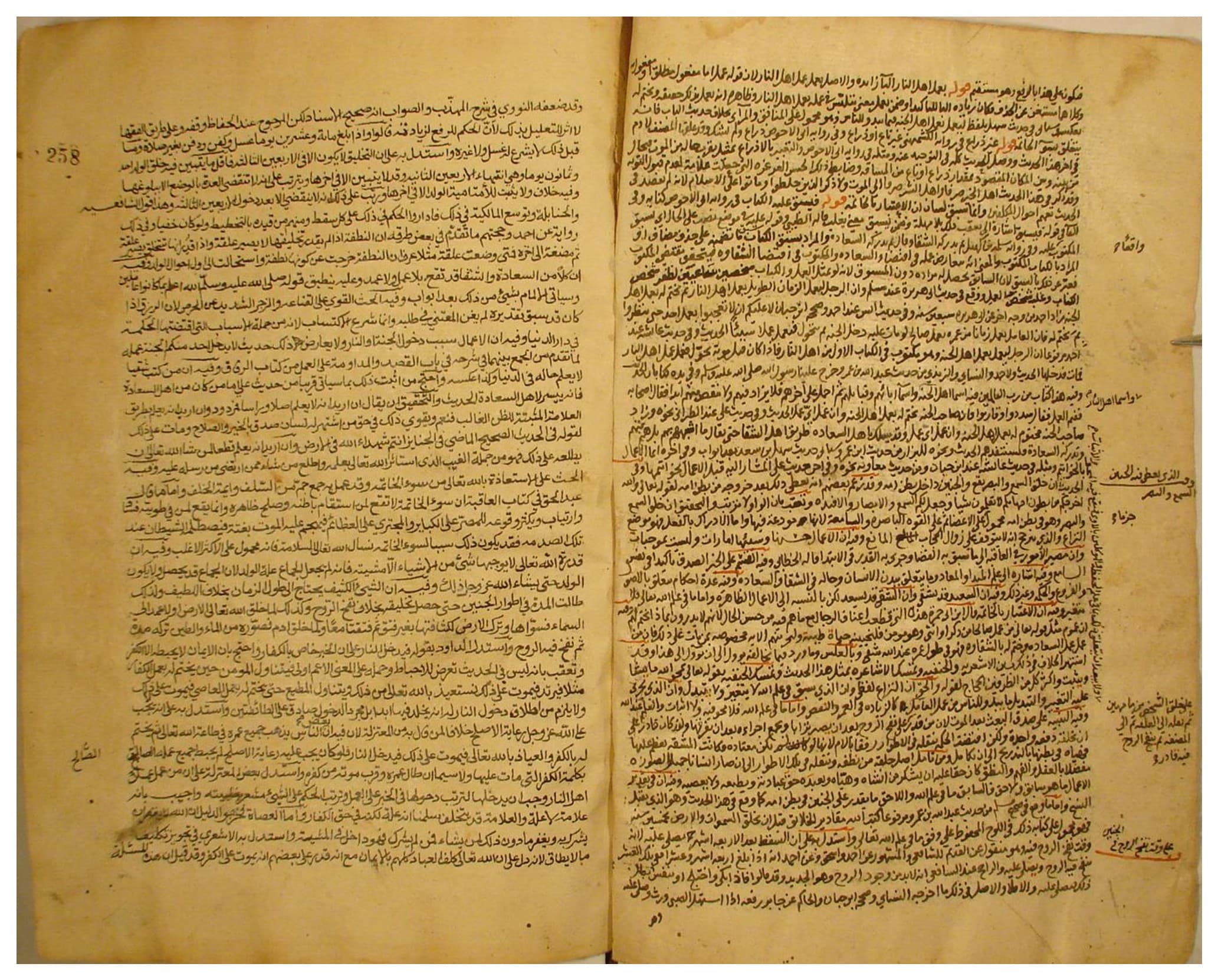 Figure 1.6. Folios of the Ibn ʿAllān manuscript of Fatḥ al-Bārī.
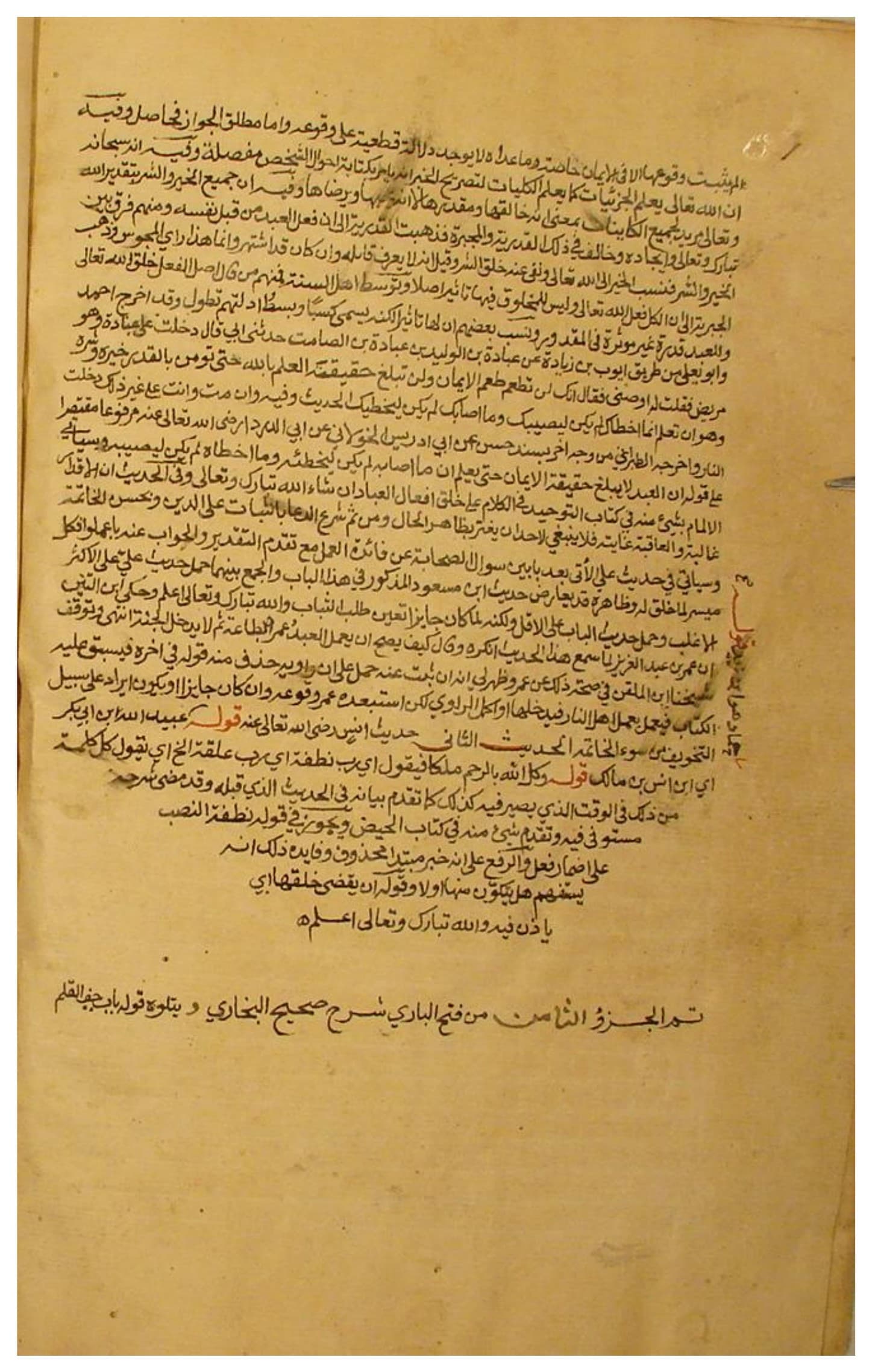 Figure 1.7. The closing folio of the eighth volume of the Ibn ʿAllān manuscript of Fatḥ al-Bārī.
Ḥusayn's correspondence also reveals the considerable difficulties encountered in securing the manuscript. An earlier attempt to purchase it had proved unsuccessful, and the opportunity appeared to have been lost. He describes the intense competition among rival purchasers and the obstacles encountered during the negotiations, remarking that, had Ṣiddīq Ḥasan Khān not been prepared to exceed the asking price, the manuscript would never have been acquired on his behalf.
In the same letter, Ḥusayn informed him that he intended to arrive in Bhopal on 15 Rajab 1292 AH (17 August 1875 CE). A subsequent undated letter29 from Ṣiddīq Ḥasan Khān to Muḥammad ibn Aḥmad al-Ahdal demonstrates that, by this stage, the purchase had been completed. Nine volumes of the manuscript had already reached Bhopal, while a single remaining volume was still in the possession of the bookseller in Ḥudayda. He therefore requested al-Ahdal's assistance in recovering and forwarding the outstanding volume. This correspondence indicates that the manuscript consisted of ten volumes, a detail independently corroborated by Ṣiddīq Ḥasan Khān in Silsilat al-ʿAsjad fī Dhikr Mashāyikh al-Sanad30, where Fatḥ al-Bārī is likewise recorded as a ten-volume manuscript (see Figure 2).31
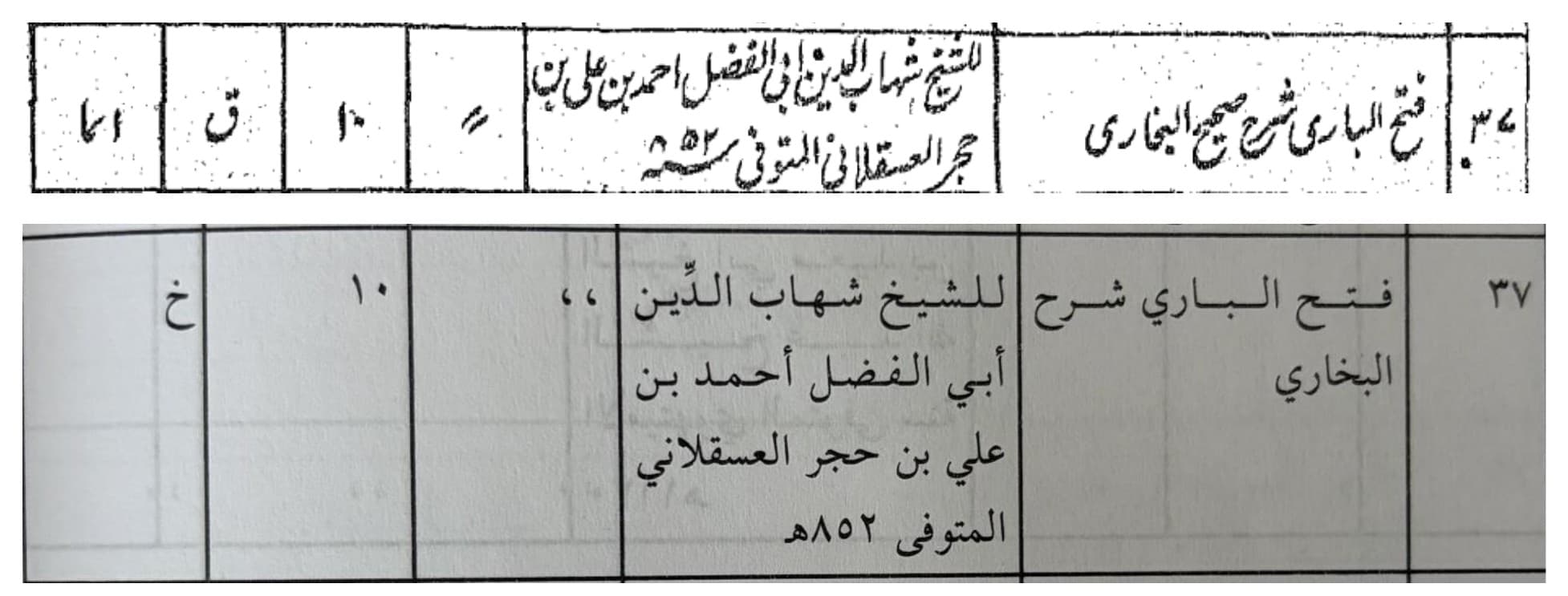 Figure 2. Entries for Fatḥ al-Bārī from Ṣiddīq Ḥasan Khān's Silsilat al-ʿAsjad fī Dhikr Mashāyikh al-Sanad: the lithographic Shāh Jahān Begum Press edition (top) and the modern Maktabat Niẓām Yaʿqūbī edition edited by Shaykh Ziyād Tuklah (bottom). Both entries record Fatḥ al-Bārī as comprising ten volumes in manuscript form.
By Jumādā al-Ākhirah 1293 AH (June–July 1876 CE)32, Ḥusayn had returned to Yemen. From there he informed Ṣiddīq Ḥasan Khān that he was negotiating the purchase of yet another manuscript of Fatḥ al-Bārī, this time one formerly owned by al-Sharīf Ḥasan ibn Khālid al-Ḥāzimī33, a manuscript renowned among Yemeni scholars. Upon receiving funds from Khān, Ḥusayn and his associates immediately dispatched a courier to secure the manuscript and instructed their agents that it "must not be allowed to slip away or be purchased by anyone else," as scholars and merchants had already begun competing to acquire it. In the same correspondence, Ḥusayn expressed his dissatisfaction with Sayyid ʿAlī Hārūn34, explaining that he would instead deliver the manuscript to India personally.
As for which manuscript served as the basis for the Būlāq edition, the evidence suggests that the Ibn ʿAllān manuscript was the copy utilised. Both ʿAlī Ḥasan Khān, in his biography of his father,35 and Ṣiddīq Ḥasan Khān himself, in Ibqāʾ al-Minan36, specifically refer to the acquisition of the manuscript associated with Ibn ʿAllān before immediately discussing its publication at the Būlāq Press. By contrast, neither account appears to associate the later manuscript formerly owned by al-Sharīf Ḥasan ibn Khālid al-Ḥāzimī with the Būlāq edition, nor have I encountered any reference indicating that it served as the printer's exemplar.
While this evidence points towards the Ibn ʿAllān manuscript serving as the basis of the Būlāq edition, the question cannot be regarded as conclusively settled. Definitive confirmation would require a complete muqābalah (textual collation) between the surviving manuscript, now preserved in the Shiblī Library, and the printed Būlāq edition. At present, I have had access only to a limited number of photographs of the manuscript, few of which are reproduced in this article. A full examination of the manuscript may yet confirm this identification more conclusively. Laʿalla Allāha yuḥdithu baʿda dhālika amrā ("Perhaps Allāh will bring about, after that, a new matter"; Qurʾān 65:1).
Taken together, these letters transform our understanding of how the manuscript underlying the first printed edition of Fatḥ al-Bārī reached Bhopal. They also preserve invaluable evidence for the manuscript itself: its previous owners, its association with Ibn ʿAllān, its ten-volume structure, and the difficulties involved in its acquisition.
Following the successful acquisition of the manuscript, Ṣiddīq Ḥasan Khān arranged for its publication at al-Maṭbaʿah al-Kubrā al-Amīriyyah, more commonly known as the Būlāq Press, in Cairo. When the work finally appeared in 1300 AH/1883 CE, it was issued in thirteen volumes together with a separate volume containing Hudā al-Sārī, Ibn Ḥajar's introduction to the commentary. This represented the first printed edition of Fatḥ al-Bārī, ending more than four centuries during which the work had circulated exclusively in manuscript form.
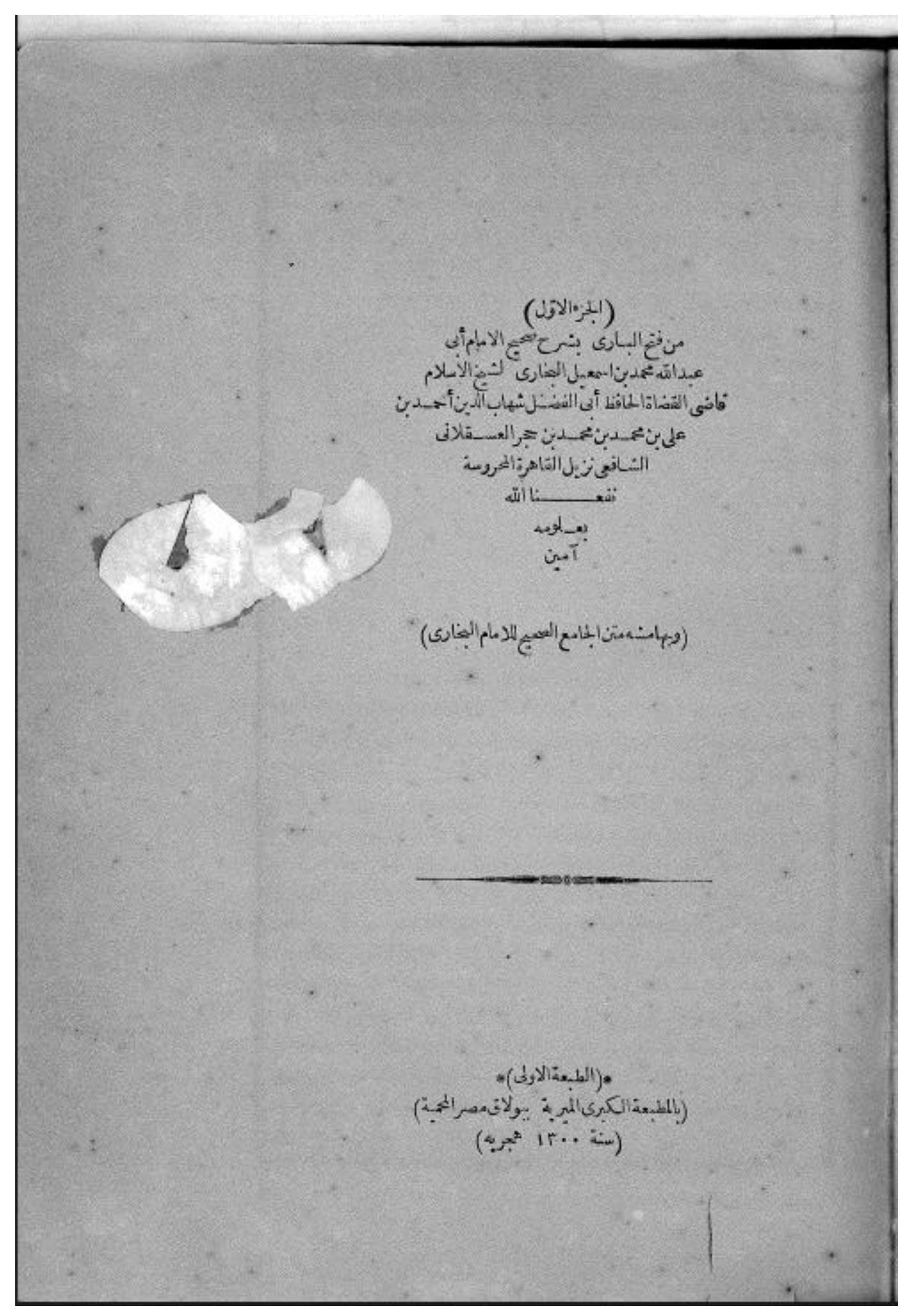 Figure 3.1. Title page of the 1300/1883 Būlāq edition of Fatḥ al-Bārī. Courtesy of the Shiblī Library, Nadwat al-ʿUlamāʾ, Lucknow; I am grateful to Shaykh Faizan Nagrami Nadwi for generously providing these images.
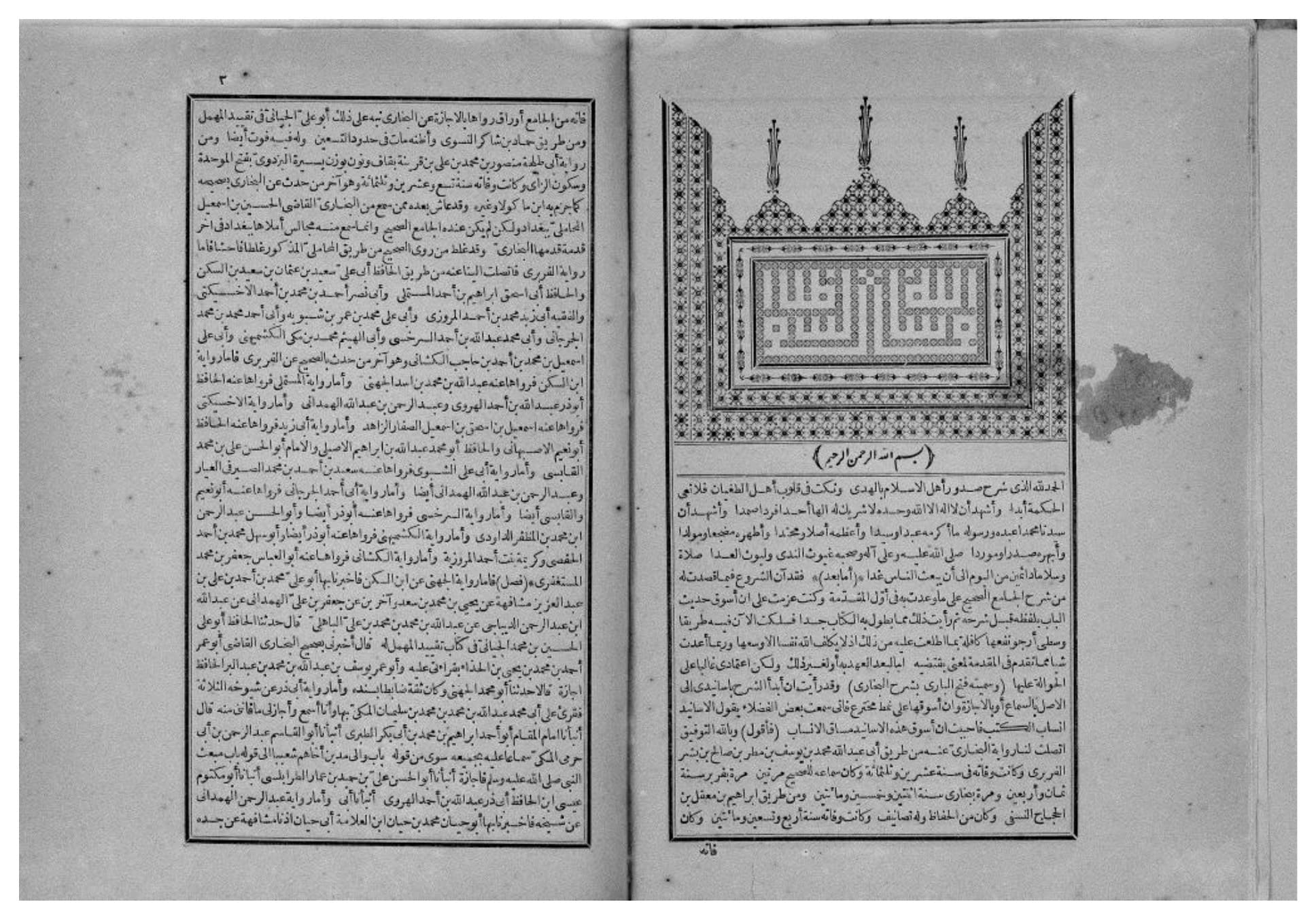 Figure 3.2. The opening pages of the 1300/1883 Būlāq edition of Fatḥ al-Bārī.
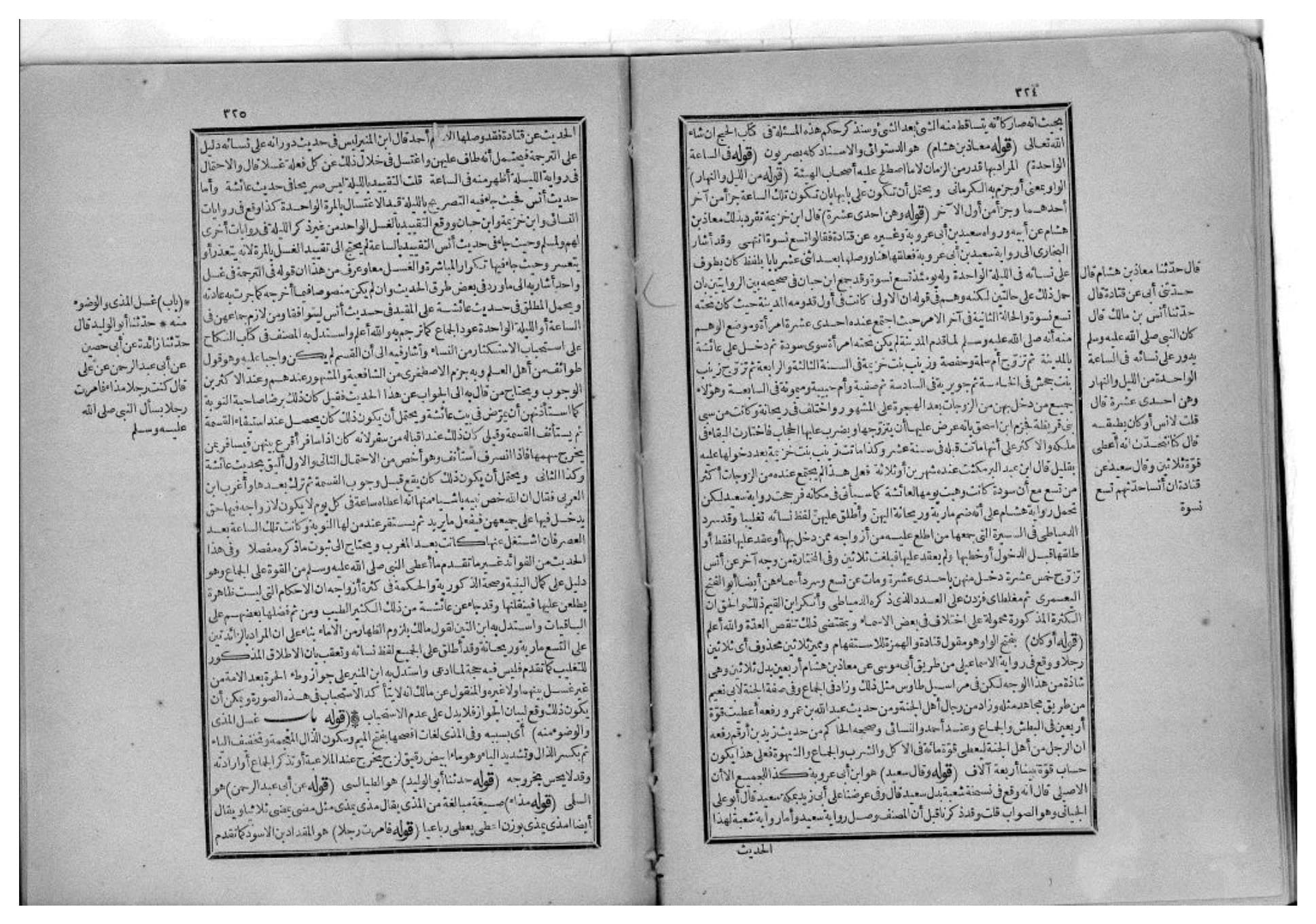 Figure 3.3. Two facing pages from the Būlāq edition of Fatḥ al-Bārī.
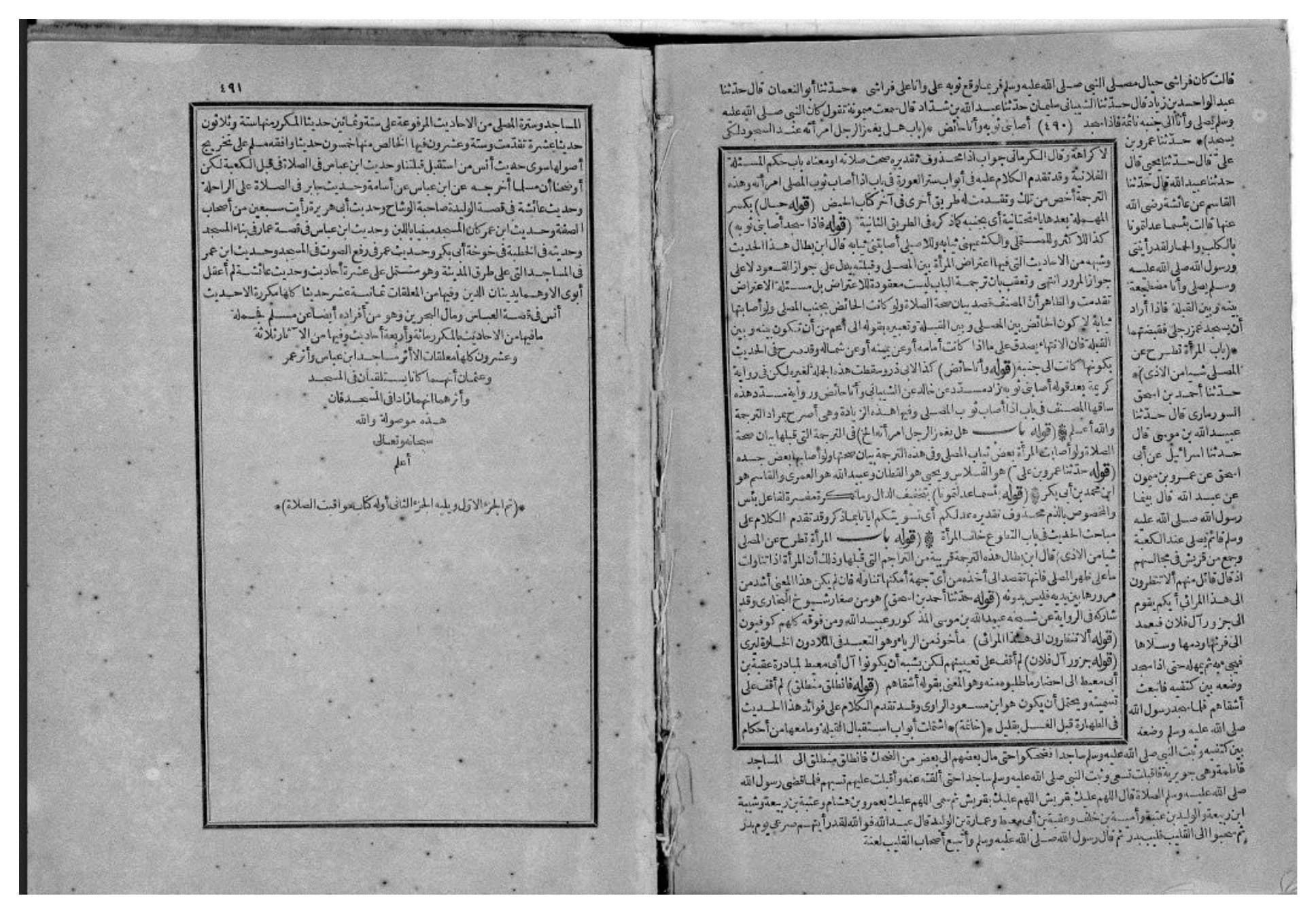 Figure 3.4. Two facing pages from the Būlāq edition of Fatḥ al-Bārī.
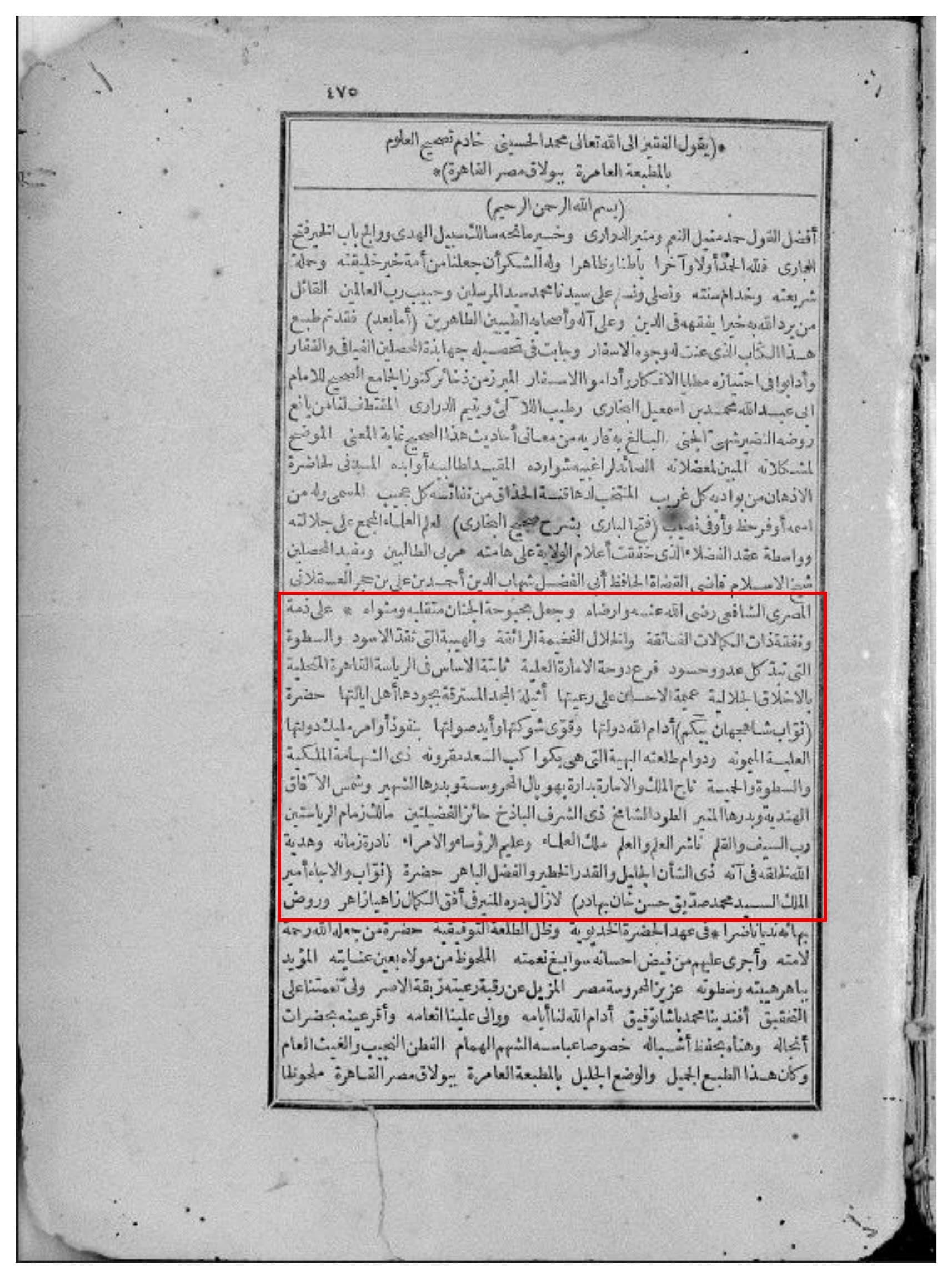 Figure 3.5. Colophon written by Muḥammad al-Ḥusaynī; the boxed area records that the edition was printed under the patronage and financial sponsorship of Nawwāb Shāh Jahān Begum, acting on the directives of Nawwāb Ṣiddīq Ḥasan Khān.
Although Arabic printing presses were active in India during this period37, Ṣiddīq Ḥasan Khān elected to have Fatḥ al-Bārī printed in Cairo. The decision was almost certainly a deliberate one. By the late nineteenth century, the Būlāq Press had established itself as the foremost government press in the Arabic-speaking world and enjoyed an unrivalled reputation for the production of major Islamic texts. Printing the work in Cairo not only ensured a high standard of typography and production but also facilitated its circulation throughout the wider Islamic world. Given Ṣiddīq Ḥasan Khān's extensive network of agents across Egypt, the Ḥijāz, the Ottoman Empire, and the Indian subcontinent, publication at Būlāq provided an ideal base from which copies could be distributed internationally.
An alternative account of the production of the Būlāq edition is preserved by Mawlānā Nūr al-Ḥasan Kandelvī38. Rather than attributing responsibility for the enterprise directly to Ṣiddīq Ḥasan Khān, Kandelvī states that the project was organised by Mawlānā Munshī Jamāl al-Dīn39, the Madār al-Mahām (Chief Minister) of the State of Bhopal, who dispatched three scholars to Egypt together with the necessary funds to supervise the printing. Although Kandelvī does not mention Khān in connection with the practical organisation of the edition, his account need not necessarily contradict the more familiar narrative. It may instead preserve the administrative dimension of the undertaking, with Munshī Jamāl al-Dīn overseeing the logistical and governmental aspects of a project that had been conceived and financed by Ṣiddīq Ḥasan Khān. The precise relationship between these two accounts, however, remains uncertain.
Publication represented only one stage of Ṣiddīq Ḥasan Khān's wider programme of disseminating the classical heritage of ḥadīth. Once printed, copies of Fatḥ al-Bārī were distributed free of charge to scholars, madrasahs, and libraries in India and abroad40. His wider manuscript collection was likewise made available through gifts and endowments, thereby substantially increasing access to works that had previously existed only in a handful of manuscript copies. The Būlāq edition itself was subsequently reproduced by several Indian presses, ensuring that the commentary became available to an increasingly wide readership. References preserved in later bibliographical works also suggest the existence of another Bhopal edition, although I have thus far been unable to identify any surviving copy or determine the date of its publication.41
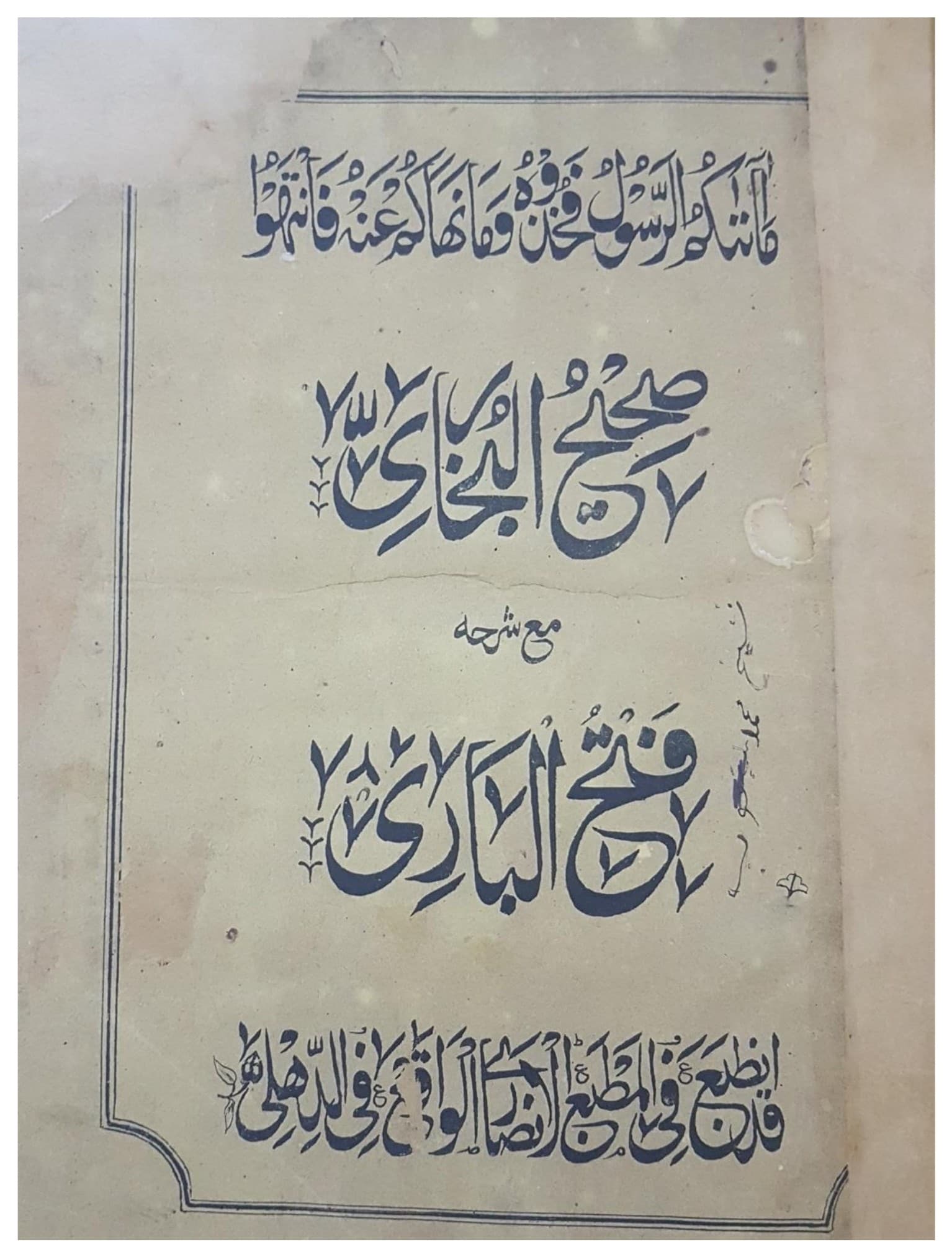 Figure 4. Title page of the Anṣārī Press edition of Fatḥ al-Bārī (Delhi).
The dissemination of the Būlāq edition continued even after Ṣiddīq Ḥasan Khān's death. One hundred copies each of Fatḥ al-Bārī and Nayl al-Awṭār remained in the possession of Shaykh Aḥmad Ḥalabī al-Bābī42, Ṣiddīq Ḥasan Khān's representative in Egypt. Writing after the Nawwāb's death, Shaykh Aḥmad informed Barādar Muʿaẓẓam and Ṣiddīq Ḥasan Khān's son, Sayyid ʿAlī Ḥasan Khān, that these copies had not yet been distributed. They subsequently arranged for the volumes to be deposited in the libraries of the Ḥaramayn as a charitable endowment (waqf), thereby ensuring their continued availability to generations of scholars and students.43
The publication of Fatḥ al-Bārī was one of the most significant achievements of Ṣiddīq Ḥasan Khān's wider programme of manuscript preservation, publication, and dissemination. His contribution extended far beyond financing its first printed edition. Through an extensive transregional network of scholars, booksellers, and intermediaries stretching from Bhopal to Yemen, Egypt, the Ḥijāz, and the Ottoman Empire, he was able to identify, authenticate, acquire, and preserve manuscripts that would otherwise have remained inaccessible to many scholars in India. The correspondence preserved in al-Rasāʾil al-Mutabādalah, read alongside contemporary biographical and autobiographical sources, permits the history of the manuscript underlying the 1300/1883 Būlāq edition of Fatḥ al-Bārī to be reconstructed with precision. More broadly, it provides a rare glimpse into the practical mechanisms through which rare Arabic manuscripts were located, negotiated, financed, and transported across the Indian Ocean, illuminating the scholarly networks that underpinned the transition of one of Islam's most celebrated commentaries on Ṣaḥīḥ al-Bukhārī from manuscript to print. And Allāh knows best.44
Footnotes
-
The earliest surviving commentary on Ṣaḥīḥ al-Bukhārī is Abū Sulaymān al-Khaṭṭābī's (d. 388 AH/998 CE) Aʿlām al-Ḥadīth. Although it does not comment upon every ḥadīth in the Ṣaḥīḥ, it remains one of the most important early commentaries due to its lucid treatment of difficult (mushkil) passages. Al-Khaṭṭābī had previously authored Maʿālim al-Sunan, the earliest commentary on Sunan Abī Dāwūd, and frequently refers readers to that work in Aʿlām al-Ḥadīth. Of particular significance is the fact that the commentary is based primarily on the recension of Ibrāhīm ibn Maʿqil al-Nasafī, much of which has otherwise been lost, thereby preserving valuable readings of that recension, while also citing the recension of al-Firabrī. See Shaykh Sharīf Ḥātim al-ʿAwnī, Sharḥ al-Ḥadīth al-Nabawī: Dirāsāt fī al-Tārīkh li-ʿIlmii wa al-Taʾṣīl Lahu wa Taqwīm al-Muṣannafāt Fīhi wa al-Tadrīb ʿAlayhi (Beirut: Markaz Namāʾ lil-Buḥūth wa al-Dirāsāt, 2021), 369, 747–809; Belal Abu-Alabbas, Al-Bukhari: The Life, Theology, and Legal Thought of Islam's Foremost Traditionalist (Edinburgh: Edinburgh University Press, 2026), 53–54. For a detailed study of the recensions of Ṣaḥīḥ al-Bukhārī, see Muntasir Zaman, The Textual Integrity of Ṣaḥīḥ al-Bukhārī: A Study on the Primary Recensions, Textual Variants, and Transmission of the Ṣaḥīḥ (Texas: Qalam Books, 2024). ↩
-
Al-Sakhāwī likewise records that Ibn Ḥajar regarded Fatḥ al-Bārī, Taghlīq al-Taʿlīq, and Nukhbat al-Fikr among the works with which he was especially pleased. See al-Sakhāwī, al-Jawāhir wa al-Durar fī Tarjamat Shaykh al-Islām Ibn Ḥajar (Beirut: Dār Ibn Ḥazm, 1999), 2/659. ↩
-
Nūr al-Ḥasan Kandelvī notes that the Shiblī Library at Nadwat al-ʿUlamāʾ preserves a valuable manuscript of Hudā al-Sārī dated 1168 AH/April 1755 CE. The manuscript formed part of the library of ʿAllāmah Muḥammad ibn Ismāʿīl al-Amīr al-Yamānī and he suggests that it most likely reached Nadwat al-ʿUlamāʾ through the Bhopal collection of Nawwāb Ṣiddīq Ḥasan Khān. Kandelvī also draws attention to another interesting manuscript of Hudā al-Sārī preserved in the Maulana Azad Library, Aligarh Muslim University, dated 1289 AH/1872–1873 CE. An ownership note at the beginning of the manuscript records that Mawlānā ʿAbd al-Ḥayy al-Lucknawī had it copied by a Hindu scribe for the sum of nine rupees. For a detailed study of these and other important manuscripts of Hudā al-Sārī preserved in India, see Nūr al-Ḥasan Kandelvī, "Ḥāfiẓ Ibn Ḥajar al-ʿAsqalānī aur Un kā Nādir Nuskhah Hudā al-Sārī (Nuskhah Kandhla)," Maʿārif 4, no. 199 (2017): 249–252. ↩
-
Al-Sakhāwī, al-Jawāhir wa al-Durar, 2/675–676. ↩
-
The title Nawwāb (Arabic: nawwāb, the plural of nāʾib, "deputy") was borne by the male rulers of several Muslim princely states in India, including Bhopal, Awadh, Rampur, and Tonk. Although Ṣiddīq Ḥasan Khān was not the sovereign ruler of Bhopal, but the husband of Nawwāb Shāh Jahān Begum, he officially held the title of Nawwāb Consort. Nevertheless, both contemporary and later Muslim scholarly literature almost invariably refers to him simply as "Nawwāb Ṣiddīq Ḥasan Khān." See Claudia Preckel, "Screening Ṣiddīq Ḥasan Khān's Library: The Use of Ḥanbalī Literature in 19th-Century Bhopal," in Debating Ibn Taymiyya and Ibn Qayyim al-Jawziyya, ed. Birgit Krawietz and Georges Tamer (Berlin/Boston: De Gruyter, 2013), 165–166. ↩
-
For detailed studies on Ṣiddīq Ḥasan Khān's life, intellectual development, and literary output, refer to his autobiography Ibqāʾ al-Minan bi-Ilqāʾ al-Miḥan as well as the comprehensive biography compiled by his son Sayyid ʿAlī Ḥasan Khān, Maʾāthir-i Ṣiddīqī: Sīrat-i Nawwāb Ṣiddīq Ḥasan Khān. This article does not seek to evaluate or endorse Ṣiddīq Ḥasan Khān's theological and intellectual positions, nor does it engage with the controversies surrounding his association with the Ahl-i Ḥadīth movement. These issues have been discussed in detail elsewhere. The present study is restricted to a historical examination of his contribution to the acquisition, preservation, and publication of Arabic manuscripts, with particular focus on his role in the first printed edition of Fatḥ al-Bārī. ↩
-
The establishment of the Būlāq Press formed part of Muḥammad ʿAlī Pasha's wider programme of modernisation. To introduce printing into Egypt, he sent an agent to Europe to receive training in the art of printing. Upon his return, the press was established at Būlāq in Cairo, where it issued its first publication in 1822. See: Metcalf B (2023). A way with words: Nawwāb Siddiq Ḥasan Khan (1832-1890) and the unexpected power of print. Journal of the Royal Asiatic Society 14. https://doi.org/10.1017/S1356186322000670. Mawlānā Nūr al-Ḥasan Kandelvī makes an important observation regarding the history of ḥadīth printing. While acknowledging the significant role played by the Būlāq Press in the publication of Islamic texts, he laments the comparatively limited attention given to the printing presses of India and the scholars, publishers, and patrons associated with them. This neglect is particularly striking given that Indian presses had already been actively engaged in the publication of ḥadīth literature prior to many of the celebrated Būlāq editions. The first complete printed edition of any work from the Six Canonical Collections (al-Kutub al-Sittah) was Sunan al-Nasāʾī, prepared by Shāh Muḥammad Isḥāq al-Dihlawī (d. 1262 AH/1846 CE), the grandson of Shāh ʿAbd al-ʿAzīz al-Dihlawī and great-grandson of Shāh Walī Allāh al-Dihlawī. This edition was published by the Sulṭān al-Maṭābiʿ Press in 1256 AH/1840 CE. Following this, the remaining canonical works appeared in print: Sunan al-Tirmidhī in 1265 AH/1849 CE, Ṣaḥīḥ al-Bukhārī in 1269 AH/1853 CE, Ṣaḥīḥ Muslim in 1270 AH/1854 CE, Sunan Abī Dāwūd in 1272 AH/1856 CE, and Sunan Ibn Mājah in 1273 AH/1857 CE. These editions, furnished with textual corrections, verification, and annotations (taṣḥīḥ, taḥqīq, and taʿlīq), represented the first complete printed editions of these works globally and were produced through the scholarly efforts of the Ḥanafī scholars of India. With the exception of Sunan Ibn Mājah, all of these works were published in corrected editions through the dedication and meticulous efforts of Mawlānā Aḥmad ʿAlī Muḥaddith Sahāranpūrī (d. 1297 AH/1880 CE). See Kandelvī, "Ḥāfiẓ Ibn Ḥajar al-ʿAsqalānī aur Un kā Nādir Nuskhah Hudā al-Sārī," 259. ↩
-
The evidence presented here disproves Ahmed El Shamsy's assessment that Ṣiddīq Ḥasan Khān did not publish editions of major classical texts. See Ahmed El Shamsy, Rediscovering the Islamic Classics: How Editors and Print Culture Transformed an Intellectual Tradition (Princeton: Princeton University Press, 2020), 174. As Nūr al-Ḥasan Kandelvī notes, several of Ibn Ḥajar al-ʿAsqalānī's works appear to have been published for the first time in India. These include Nukhbat al-Fikr, printed in Calcutta in 1271 AH/1854–1855 CE together with the commentary of Shaykh Wajīh al-Dīn al-Gujrātī by Fakhr al-Maṭābiʿ; Taqrīb al-Tahdhīb, published in 1272 AH/1855–1856 CE at Maṭbaʿ Aḥmadī, Delhi, under the supervision of Mawlānā Aḥmad ʿAlī Sahāranpūrī; al-Kāfī al-Shāfī fī Takhrīj Aḥādīth al-Kashshāf; al-Qawl al-Musaddad fī al-Dhabb ʿan Musnad Aḥmad; al-Durar al-Kāminah fī Aʿyān al-Miʾah al-Thāminah; and Inbāʾ al-Ghumr bi-Anbāʾ al-ʿUmr. See Kandelvī, "Ḥāfiẓ Ibn Ḥajar al-ʿAsqalānī aur Un kā Nādir Nuskhah Hudā al-Sārī," 254. ↩
-
Begum (Urdu: Begam) was an honorific title meaning "lady" or "queen," traditionally used for women of the Mughal elite. By adopting the title, together with regnal names such as Shāh Jahān, the female rulers of Bhopal consciously emphasised their continuity with the Mughal imperial tradition. Following the accession of Qudsiyyah Begum (r. 1819–1837), Bhopal was ruled for almost a century by four successive Begums. Of particular relevance to this study are Sikandar Begum (r. 1844–1868), whose reign is widely regarded as the state's "Golden Age," and her daughter Shāh Jahān Begum (r. 1868–1901), under whose patronage Ṣiddīq Ḥasan Khān undertook his extensive programme of manuscript acquisition and publication. See Preckel, "Screening Ṣiddīq Ḥasan Khān's Library," 167. ↩
-
For a comprehensive discussion of the origins, defining characteristics, and methodology of the Ahl-i Ḥadīth movement, together with an examination of its similarities to and differences from the Wahhābiyyah, see Sayyid ʿAbd al-Majīd al-Ghawrī, al-Muḥaddithūn min Jamāʿat Ahl al-Ḥadīth fī al-Hind wa Juhūduhum fī al-Ḥadīth al-Nabawī: Dirāsah Istiqrāʾiyyah Naqdiyyah (Beirut: Dār Ibn Kathīr, 2022), 67–104. ↩
-
Bhopal was one of the largest and most important Muslim-ruled princely states in nineteenth-century India, second in prominence only to Hyderabad. Founded in the early eighteenth century by the Afghan (Pashtun) ruler Dōst Muḥammad Khān (d. 1728), the state gradually established its independence from Mughal authority. Following a treaty with the British in 1818, Bhopal became part of the Central India Agency while retaining a high degree of internal autonomy as one of the British Indian Empire's "First Class States." Owing to the absence of a male heir, Bhopal was ruled for almost a century by four successive Begums, whose reigns were marked by significant administrative, educational, and religious reforms carried out with British support. Although governed by a Muslim ruling dynasty, the majority of the state's population was Hindu. For further details, see Claudia Preckel, "Bhopāl," in Encyclopaedia of Islam, 3rd ed., vol. 3 (2011): 123–132; and Claudia Preckel, "Screening Ṣiddīq Ḥasan Khān's Library: The Use of Ḥanbalī Literature in 19th-Century Bhopal," in Debating Ibn Taymiyya and Ibn Qayyim al-Jawziyya, ed. Birgit Krawietz and Georges Tamer (Berlin/Boston: De Gruyter, 2013), 165–167. ↩
-
Sayyid ʿAlī Ḥasan Khān, Maʾāthir-i Ṣiddīqī (Lahore: Jamʿiyyat Ahl al-Sunnah, 1991), 4/177. ↩
-
These scholarly and publishing networks effectively came to an end in 1885, when Ṣiddīq Ḥasan Khān was accused by the British authorities of inciting Indian Muslims against the colonial government. He was stripped of his official titles and placed under house arrest in Nūr Maḥall, where he remained until his death in 1307 AH/1890 CE. Although permitted to spend the nights with his wife, Shāh Jahān Begum, at the Tāj Maḥall Palace, his confinement severed his regular contact with publishers and scholarly associates in Cairo, Istanbul, and elsewhere, bringing his publishing activities to an end. It was only with the later emergence of the Salafiyyah that some of his Arabic works were reprinted in Beirut, whereas the majority of his Persian and Urdu writings remained unpublished in subsequent editions. See Preckel, "Screening Ṣiddīq Ḥasan Khān's Library," 183. ↩
-
He was one of the leading Ahl-i Ḥadīth scholars of nineteenth-century India, having studied under Shāh Muḥammad Isḥāq al-Dihlawī (d. 1262 AH/1846 CE), the great-grandson of Shāh Walī Allāh al-Dihlawī. Under his guidance, he studied the Six Canonical Collections (al-Kutub al-Sittah), al-Muwaṭṭaʾ of Mālik, Mishkāt al-Maṣābīḥ, al-Suyūṭī's al-Jāmiʿ al-Ṣaghīr, Kanz al-ʿUmmāl, and numerous other works. Shāh Muḥammad Isḥāq granted him ijāzah in the books of ḥadīth and appointed him as his successor in the teaching and transmission of the discipline. He subsequently dedicated much of his life to teaching ḥadīth, attracting such a large number of students that he became widely known by the title Shaykh al-Kull ("the teacher of all"). Among his most prominent students were Shams al-Ḥaqq ʿAẓīmābādī (d. 1329 AH/1911 CE), author of ʿAwn al-Maʿbūd Sharḥ Sunan Abī Dāwūd; Waḥīd al-Zamān al-Lakhnawī (d. 1338 AH/1920 CE), who produced the first complete Urdu translation of the Six Canonical Collections; and ʿAbd al-Raḥmān al-Mubārakfūrī (d. 1353 AH/1935 CE), author of Tuḥfat al-Aḥwadhī. Alongside his teaching activities, he authored several works and scholarly annotations, including marginal notes (ḥawāshī) on Ṣaḥīḥ al-Bukhārī, which remain unpublished. For a detailed account of his life, see Faḍl Ḥusayn Bihārī's Urdu biography al-Ḥayāt baʿd al-Mamāt. For an Arabic treatment of his biography, see Rāshid Ḥasan al-Mubārakfūrī, Majmūʿat Rasāʾil al-Imām al-Muḥaddith Muḥammad Nadhīr Ḥusayn al-Dihlawī (Karachi: Dār al-Aḥsan, 2026), 1/21–99, al-Ghawrī, al-Muḥaddithūn min Jamāʿat Ahl al-Ḥadīth fī al-Hind, 259-316. ↩
-
Mawlānā Ḥakīm Sayyid ʿAbd al-Ḥayy al-Ḥasanī, Dihlī aur Uskē Aṭrāf: Ek Safarnāmah aur Rōznāmachah (Karachi: Majlis-i Nashriyyāt-i Islām, 1998), 37. ↩
-
Ṣiddīq Ḥasan Khān, Ibqāʾ al-Minan bi-Ilqāʾ al-Miḥan (Lahore: Dār al-Daʿwah al-Salafiyyah, 1986), 70. ↩
-
With regard to the earliest known arrival of Fatḥ al-Bārī in India, Muḥammad ibn ʿUmar al-Āṣifī relates that the muḥaddith Abū al-Qāsim ibn Fahd (d. 925 AH/1519 CE) migrated to India carrying a copy of Fatḥ al-Bārī containing annotations in the handwriting of his father and uncle, which he subsequently presented to one of the Indian rulers of his time. Although I have been unable to determine whether this represents the earliest arrival of Fatḥ al-Bārī in the subcontinent, the report demonstrates that at least one manuscript of the work was present in India approximately three centuries before the publication of the Būlāq edition sponsored by Ṣiddīq Ḥasan Khān. See Sayyid ʿAlī Ḥasan Khān, Maʾāthir-i Ṣiddīqī, 4/168–169; Barbara D. Metcalf, Islamic Revival in British India: Deoband, 1860–1900 (Princeton: Princeton University Press, 1982), 205–206; and Mawlānā Ḥakīm Sayyid ʿAbd al-Ḥayy al-Ḥasanī, Nuzhat al-Khawāṭir wa Bahjat al-Masāmiʿ wa al-Nawāẓir (Beirut: Dār Ibn Ḥazm, 1999), 4/302. ↩
-
See Muḥammad b. Ismāʿīl al-Bukhārī, Ṣaḥīḥ al-Bukhārī, with the marginal notes of Mawlānā Aḥmad ʿAlī Sahāranpūrī, ed. Muḥammad Taqī al-Dīn al-Nadwī (Muẓaffarpur, Azamgarh, U.P., India: Markaz Abī al-Ḥasan al-Nadwī, 2011), 1/148. ↩
-
Sayyid ʿAlī Ḥasan Khān, Maʾāthir-i Ṣiddīqī, 2/70. For a catalogue of the books acquired by Ṣiddīq Ḥasan Khān for his personal library, see Ṣiddīq Ḥasan Khān, Silsilat al-ʿAsjad fī Dhikr Mashāyikh al-Sanad (Bahrain: Maktabat Niẓām Yaʿqūbī al-Khāṣṣah, 2014), 311–377. The catalogue lists 603 works and records, for each entry, whether Ṣiddīq Ḥasan Khān acquired the work in manuscript or printed form, together with, where applicable, the place of publication. ↩
-
Sayyid ʿAlī Ḥasan Khān, Maʾāthir-i Ṣiddīqī, 4/167-168. ↩
-
Ṣiddīq Ḥasan Khān, Ibqāʾ al-Minan, 70. ↩
-
He is Ibn ʿAllān (d. 1057 AH) who is the author of the commentary of Riyāḍ al-Ṣāliḥīn, Dalīl al-Fāliḥīn. He owned an extensive library consisting of over a thousand books. Shaykh ʿAbdullāh al-Wazīr (1147 AH) states that Ibn ʿAllān was an avid book lover and collected many books, and after his death, the books were distributed to different places, however, the majority of them reached Yemen. He transcribed countless books. For his transcription of Fatḥ al-Bārī, see al-Ḥasanī, Nuzhat al-Khawāṭir, 8/1249; Abū Hāshim Ibrāhīm ibn Manṣūr al-Hāshimī al-Amīr, "Al-ʿAllāmah Ibn ʿAllān al-Makkī Ḥayātuh wa Āthāruh wa Juhūduh fī Khidmat al-Balad al-Ḥarām" (Beirut: Dār al-Ḥadīth al-Kattāniyyah, 2016), 96. ↩
-
Ṣiddīq Ḥasan Khān, Ibqāʾ al-Minan, 70. ↩
-
The published edition of al-Rasāʾil al-Mutabādalah bayna al-Sayyid Ṣiddīq Ḥasan Khān wa Baʿḍ ʿUlamāʾ ʿAṣrih contains only five references to Fatḥ al-Bārī, all of which have been examined in the present study. ↩
-
Shaykh Ḥusayn ibn Muḥsin al-Anṣārī al-Yamanī (1245–1327 AH/1829–1909 CE) was one of the leading Yemeni ḥadīth scholars of the nineteenth century. Born in Ḥudayda, he studied under leading scholars of Tihāmah, Zabīd, Ṣanʿāʾ, and the Ḥaramayn, receiving authorisations (ijāzāt) from, among others, al-Sayyid Sulaymān al-Ahdal, Ṣafī al-Dīn Aḥmad ibn Muḥammad al-Shawkānī (son of al-Shawkānī), and al-Sharīf Muḥammad ibn Nāṣir al-Ḥāzimī. He served as qāḍī of al-Luḥayyah for approximately four years before resigning after refusing to endorse an unlawful Ottoman tax on pearl merchants, despite threats and imprisonment. He subsequently settled in India, where he became one of the foremost authorities on ḥadīth, teaching Nawwāb Ṣiddīq Ḥasan Khān, Muḥammad Bashīr al-Sahsawānī, Shams al-Ḥaqq al-ʿAẓīmābādī, ʿAbd Allāh al-Ghāzīpūrī, ʿAbd al-ʿAzīz al-Raḥīmābādī, Waḥīd al-Zamān al-Ḥaydarābādī, Sayyid ʿAbd al-Ḥayy al-Ḥasanī (father of Shaykh Abū al-Ḥasan ʿAlī al-Ḥasanī al-Nadwī), and numerous other scholars. See al-Ḥasanī, Nuzhat al-Khawāṭir, 8/1212–1214. ↩
-
The chronology of Ḥusayn ibn Muḥsin al-Anṣārī's movements between Yemen and Bhopal can be reconstructed by reading Sayyid ʿAbd al-Ḥayy al-Ḥasanī's account in Nuzhat al-Khawāṭir wa Bahjat al-Masāmiʿ wa-l-Nawāẓir alongside the dated correspondence preserved in al-Rasāʾil al-Mutabādalah bayna al-Sayyid Ṣiddīq Ḥasan Khān wa Baʿḍ ʿUlamāʾ ʿAṣrih. Al-Ḥasanī mentions that al-Anṣārī first travelled to India five years after the Indian Mutiny of 1857, remaining in Bhopal for two years during the rule of Sikandar Begum before returning to Yemen. He then returned to Bhopal five years later during the reign of Shāh Jahān Begum, stayed for four years, and again returned to Yemen for another five years before settling permanently in Bhopal. This places his second period of residence in Yemen approximately between 1290–1295 AH/1873–1878 CE. The letters concerning the search, negotiation, and eventual acquisition of the Fatḥ al-Bārī manuscript correspond to this period, demonstrating that the manuscript was acquired while al-Anṣārī was residing in Yemen and acting as Ṣiddīq Ḥasan Khān's intermediary. See al-Ḥasanī, Nuzhat al-Khawāṭir, 8/123, Ṣiddīq Ḥasan Khān, al-Rasāʾil al-Mutabādalah bayna al-Sayyid Ṣiddīq Ḥasan Khān wa Baʿḍ ʿUlamāʾ ʿAṣrih (Amman: Dār al-Fatḥ, 2023), 118. ↩
-
Ṣiddīq Ḥasan Khān, al-Rasāʾil al-Mutabādalah, 110. ↩
-
Ṣiddīq Ḥasan Khān, al-Rasāʾil al-Mutabādalah, 118. ↩
-
Ṣiddīq Ḥasan Khān, al-Rasāʾil al-Mutabādalah, 133-135. ↩
-
Ṣiddīq Ḥasan Khān, Silsilat al-ʿAsjad, 316. ↩
-
The column headings are cropped in the reproduced images. In the original lithographic edition, from right to left, the columns record: the catalogue number, the title of the work, the author, the language (ʿ = Arabic), the number of volumes, whether the work is in printed or manuscript form, and its price. In the modern Maktabat Niẓām Yaʿqūbī edition edited by Shaykh Ziyād Tuklah, the final column recording the price has been omitted. In the lithographic edition, the penultimate column is headed maṭbūʿ yā qalamī ("printed or handwritten"), where the abbreviation q denotes qalamī (manuscript). In the modern edition, the corresponding column is headed maṭbūʿ aw makhṭūṭ ("printed or manuscript"), where the abbreviation kh denotes makhṭūṭ (manuscript). Although the terminology differs between the two editions, both entries identify Fatḥ al-Bārī as a manuscript comprising ten volumes. ↩
-
Ṣiddīq Ḥasan Khān, al-Rasāʾil al-Mutabādalah, 113-117. ↩
-
For his biography, see Khayr al-Dīn al-Ziriklī, al-Aʿlām: Qāmūs Tarājim li-Ashhar al-Rijāl wa-l-Nisāʾ min al-ʿArab wa-l-Mustaʿribīn wa-l-Mustashriqīn, 15th ed. (Beirut: Dār al-ʿIlm li-l-Malāyīn, 2002), 2/189. ↩
-
An undated letter from Ṣiddīq Ḥasan Khān to Sayyid ʿAlī Hārūn, the raʾīs of al-Ḥudaydah, provides further insight into the early stages of the search for Fatḥ al-Bārī. Although the letter itself bears no date, its contents allow its approximate placement within the wider chronology of Ḥusayn ibn Muḥsin al-Anṣārī's movements. Khān mentions that he first came to know of Sayyid ʿAlī Hārūn through Ḥusayn Muḥsin when the latter arrived in Bhopal. Since al-Anṣārī's second residence in Bhopal occurred approximately between 1286–1290 AH/1869–1873 CE, and the later correspondence discussing the acquisition of Fatḥ al-Bārī is dated 1293 AH/1876 CE, this letter was most likely written sometime between 1290–1293 AH (1873–1876 CE), after al-Anṣārī's return to Yemen but before the later negotiations concerning the manuscript. In this letter, Khān explains that although Ḥusayn Muḥsin frequently sought rare works on his behalf, he was sometimes unable to secure them due to financial limitations, especially because sellers often required immediate payment. Khān therefore requested Sayyid ʿAlī Hārūn's assistance, reasoning that such financial obstacles would not apply to him, and included Fatḥ al-Bārī among the works he hoped to acquire. However, the subsequent correspondence of 1293 AH/1876 CE suggests that this attempt was unsuccessful. While informing Khān about the Fatḥ al-Bārī manuscript in the possession of the descendants of al-Ḥāzimī, Ḥusayn Muḥsin remarked regarding Sayyid ʿAlī Hārūn: "we did not find any seriousness from him, and Allāh has sufficed us from needing him". The responsibility for locating and securing the manuscript therefore appears to have remained with al-Anṣārī himself. See Ṣiddīq Ḥasan Khān, al-Rasāʾil al-Mutabādalah, 114, 156-157. ↩
-
Sayyid ʿAlī Ḥasan Khān, Maʾāthir-i Ṣiddīqī, 4/168. ↩
-
Ṣiddīq Ḥasan Khān, Ibqāʾ al-Minan, 70. ↩
-
The Bhopal state itself maintained four presses: the Sikandarī Press for official documents, advertisements, and maps; the Shāhjahānī Press for educational works, newspapers, and some of the Nawwāb's writings; the Sulṭānī Press for state documents; and the Ṣiddīqī Press, which was primarily dedicated to printing classical works and the numerous writings of Ṣiddīq Ḥasan Khān. The activity of the Ṣiddīqī Press was so extensive that its staff were constantly engaged in copying, proofreading, and printing, yet the press remained insufficient for the volume of works produced. See Sayyid ʿAlī Ḥasan Khān, Maʾāthir-i Ṣiddīqī, 3/113. ↩
-
Kandelvī, "Ḥāfiẓ Ibn Ḥajar al-ʿAsqalānī aur Un kā Nādir Nuskhah Hudā al-Sārī," 254. ↩
-
Munshī Jamāl al-Dīn (b. 1216 AH) was a prominent administrator and scholar associated with the Walī Allāhī tradition. Born in a village near Delhi, he benefited from the gatherings of Shāh ʿAbd al-ʿAzīz al-Dihlawī and Shāh Rafīʿ al-Dīn al-Dihlawī. He travelled to Bhopal through a recommendation from Mawlānā Salām Allāh, a student of Shāh Rafīʿ al-Dīn. Entering the service of Qudsiyyah Begum and later Sikandar Jahān Begum, he rose through the administration until becoming Madār al-Mahām (chief minister) in 1268 AH. He is credited with reorganising the administration of Bhopal and contributing to its religious and educational development, thereby strengthening the connection between Bhopal and the Walī Allāhī scholarly network. Sayyid ʿĀbid ʿAlī Wajdī al-Ḥusaynī, Bhopāl Taḥrīkāt-i Āzādī ke Āʾīnah Mein (Bhopal: Bhopal Book House, 1986), 228–229. ↩
-
Al-Ḥasanī, Nuzhat al-Khawāṭir, 8/1249, Preckel, "Screening Ṣiddīq Ḥasan Khān's Library," 185. ↩
-
See: Sayyid Aḥmad Ṣaqar, "Muqaddimāt" (Riyāḍ: Dār al-Tawḥīd, 1430), 280, Qasim Zaman, "Commentaries, Print and Patronage: Hadith and the Madrasas in Modern South Asia" (Bulletin of the School of Oriental and African Studies, University of London, 1999), 62/63. Mawlānā Nūr al-Ḥasan Kandelvī states that one of the earliest Indian editions of Fatḥ al-Bārī was published by the Anṣārī Press in Delhi in 1310 AH. According to him, printing commenced around 1304 AH and was completed in 1310 AH. This appears to be the same edition described by Aḥmad Najrān, although Najrān gives 1304 AH as the publication date rather than the commencement of printing. He likewise identifies the Anṣārī Press as the publisher, while providing additional bibliographical details, namely that the text was corrected (taṣḥīḥ) by Muḥammad ʿAbd al-Majīd, the proprietor of the press, Muḥammad ʿInāyat, and others, and that the edition was issued in six volumes (mujalladāt) comprising three parts (ajzāʾ). The title page reproduced in Figure 4 is the edition described by Mawlānā Nūr al-Ḥasan Kandelvī and recorded by Aḥmad Najrān. A further point of interest is noted by the Indian scholar who was based in Saudi Arabia, Abū al-Ashbāl Aḥmad Shāghif, in his Itḥāf al-Qārī bi-Sadd Bayāḍāt Fatḥ al-Bārī. He describes what he calls the "Indian edition" (al-ṭabʿah al-Hindiyyah), published in Delhi in 1310 AH, as the finest edition of Fatḥ al-Bārī. Although he does not identify the press by name, this almost certainly refers to the Anṣārī Press edition, as it is the known Delhi edition published in 1310 AH. Shāghif further remarks that this edition was among the ḥasanāt (lasting scholarly merits) of Ṣiddīq Ḥasan Khān. At first glance, this statement could be understood to mean that Ṣiddīq Ḥasan Khān also financed or otherwise sponsored the Anṣārī Press edition, in a manner similar to his patronage of the earlier Būlāq edition. However, Khān himself states in his autobiography that, following the publication of the Būlāq edition, a number of printing presses in India used it as the basis for their own subsequent editions. This testimony suggests that the Anṣārī Press edition was more likely one such derivative printing, ultimately tracing back to the manuscript acquired by Khān and used for the Būlāq edition, rather than an edition directly sponsored by him. While the available evidence does not entirely exclude the former possibility, Khān's own account provides stronger grounds for preferring the latter interpretation. Mawlānā Nūr al-Ḥasan Kandelvī also alludes to another edition of Fatḥ al-Bārī, stating that it was published from Bhopal in accordance with the instructions of either the ruler of the State of Bhopal, Shāh Jahān Begum, or Mawlānā Munshī Jamāl al-Dīn, Dār al-Mahām (Chief Secretary) of the State of Bhopal. The author's use of the disjunctive ("or") suggests some uncertainty regarding whose instructions were responsible for the publication. By contrast, Aḥmad Najrān, in Muʿjam al-Maṭbūʿāt al-ʿArabiyyah fī Shibh al-Qārrah al-Hindiyyah wa al-Bākistāniyyah, unequivocally attributes the edition to the patronage (dhimmah) of Shāh Jahān Begum, noting that it was corrected (taṣḥīḥ) by Muḥammad Ḥusaynī, without mentioning Munshī Jamāl al-Dīn. See Aḥmad Najrān, Muʿjam al-Maṭbūʿāt al-ʿArabiyyah fī Shibh al-Qārah al-Hindiyyah al-Bākistāniyyah Mundhu Dukhūl al-Maṭbaʿah Ilayhā Ḥattā ʿĀm 1980 (Riyadh: Maktabat al-Malik Fahd al-Waṭaniyyah, 2000), 124, Abū al-Ashbāl Aḥmad Shāghif, Itḥāf al-Qārī bi-Sadd Bayāḍāt Fatḥ al-Bārī (Riyadh: Dār al-Waṭan li-l-Nashr, 1999), 4, Ṣiddīq Ḥasan Khān, Ibqāʾ al-Minan, 70. ↩
-
Originally from Aleppo, Syria, he later settled in Egypt, where he emerged as one of the pioneers of printing and publishing in the Islamic world. In 1859, he established the Maymaniyya Press, which gained a reputation for its high-quality editions of encyclopaedic works and significant classical texts. Before his death, he entrusted the press to his nephews, who continued its operations under the name Mustafa al-Bābī al-Ḥalabī & Sons Library and Printing Company. See: al-Ghawrī, al-Muḥaddithūn min Jamāʿat Ahl al-Ḥadīth fī al-Hind, 219. ↩
-
Sayyid ʿAlī Ḥasan Khān, Maʾāthir-i Ṣiddīqī, 4/168. ↩
-
The author welcomes constructive feedback, critiques and further suggestions. ↩